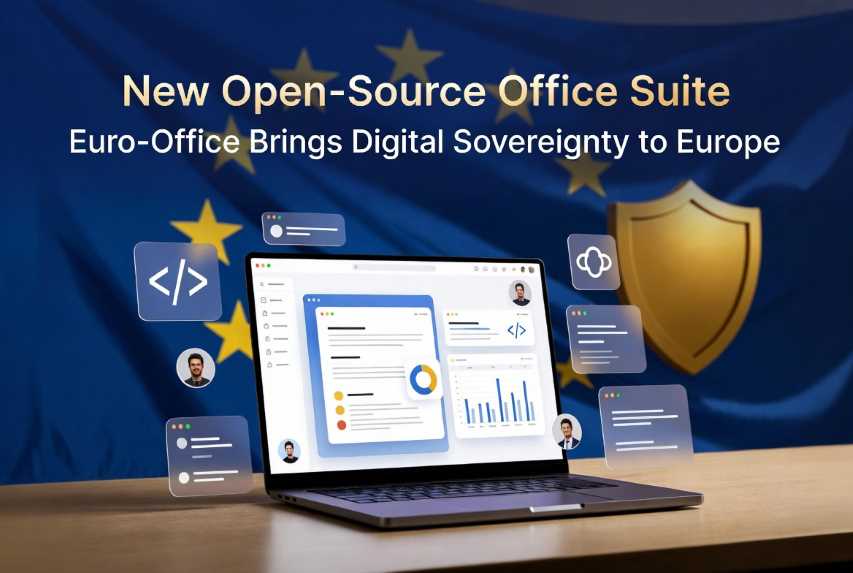
In a landmark development for digital independence across the continent, a broad coalition of European technology leaders is preparing to unveil the first stable release of Euro-Office on June 9, 2026. This comprehensive, fully open-source, web-based office suite stands as a compelling, privacy-first challenger to dominant platforms like Microsoft 365 and Google Workspace. Designed with data sovereignty, transparency, and seamless compatibility at its core, Euro-Office aims to give governments, businesses, educational institutions, and individual users a trustworthy European-grown solution for everyday productivity needs.
The timing could not be more significant. As organizations worldwide grapple with concerns over data privacy, foreign jurisdiction risks, and vendor lock-in, Euro-Office emerges not merely as another productivity tool but as a strategic response to the growing demand for control over critical digital infrastructure. Built entirely on European values and infrastructure, it promises to keep sensitive documents, collaborative workflows, and organizational data firmly within sovereign boundaries while delivering modern, user-friendly features that rival—or even surpass—its proprietary competitors.
The Driving Force Behind Digital Sovereignty
The origins of Euro-Office trace back to early 2026 when leading European firms recognized a pressing gap in the market. For years, public institutions, enterprises, and even small businesses across the European Union have relied heavily on American cloud platforms for document creation, editing, and collaboration. However, escalating geopolitical tensions, stricter data protection regulations such as GDPR, and high-profile incidents involving data access by non-European authorities have fueled a collective push for alternatives.
Announced in March 2026 at a high-profile event in Berlin, the project brings together a formidable alliance of established players including Nextcloud, IONOS, Proton, Soverin, XWiki, OpenProject, Abilian, BTactic, Open-Xchange, EuroStack, Tuta, and Office.eu. This collaborative effort addresses long-standing frustrations with opaque proprietary systems where code cannot be audited, data may reside in distant jurisdictions, and updates or pricing changes occur without local input.
By choosing open-source development under the AGPL-3.0 license, the initiative ensures complete transparency. Every line of code is publicly reviewable, modifiable, and improvable by the community. This “who codes, decides” philosophy contrasts sharply with closed ecosystems, offering long-term sustainability and freedom from single-vendor dependencies. The result is a platform engineered for European standards—secure, auditable, and hosted on local infrastructure when deployed by partner providers.
Rich Feature Set Designed for Real-World Productivity
Euro-Office is engineered as a modern, browser-first collaborative environment rather than a traditional desktop application. This approach allows it to integrate smoothly into existing digital workspaces, wikis, project management systems, and cloud storage solutions. At its heart are four powerful applications: a word processor, spreadsheet editor, presentation creator, and PDF handler, all supporting real-time multi-user editing.
Users will appreciate the familiar ribbon-style interface that closely mirrors Microsoft Office, drastically reducing the learning curve for teams transitioning from Word, Excel, or PowerPoint. Advanced capabilities include robust support for complex formatting, formulas, charts, and animations, ensuring high fidelity when opening and editing Microsoft Office formats such as DOCX, XLSX, and PPTX. It also fully embraces open standards like ODT, ODS, and ODP, making it versatile for organizations already using LibreOffice or similar tools.
Collaboration stands out as a core strength. Multiple participants can work simultaneously on the same document with live cursors, inline comments, track changes, version history, and integrated chat functionality. Document comparison tools and detailed revision logs further enhance teamwork, particularly valuable for legal, academic, or regulatory environments where audit trails matter. PDF editing capabilities add another layer of utility, allowing users to annotate, fill forms, and modify documents without needing separate software.
Performance remains snappy even with large files or numerous collaborators, thanks to optimized backend architecture. Mobile responsiveness ensures professionals can review or contribute on tablets and smartphones without sacrificing functionality. Future updates are expected to bring dedicated desktop clients and enhanced mobile applications, broadening accessibility even further.
A True Open-Source Foundation with Community Governance
Technically, Euro-Office represents a clean, liberated fork of the open-source elements from the OnlyOffice project. The development team has meticulously reviewed and refined the codebase to eliminate any proprietary restrictions, resulting in a fully transparent and community-driven platform. This move was motivated by the desire for genuine openness, easier contribution processes, and alignment with European sovereignty priorities.
Development happens openly on public repositories, inviting developers, organizations, and enthusiasts from around the world to participate under a clear code of conduct. This inclusive model fosters innovation through diverse perspectives while maintaining high standards of security and quality. Unlike some partially open solutions, Euro-Office commits to keeping the entire suite auditable, ensuring no hidden backdoors or undisclosed telemetry can compromise user trust.
Security features receive special attention. End-to-end encryption options, granular permission controls, and compliance with stringent European data regulations position Euro-Office as an ideal choice for sensitive sectors such as healthcare, finance, and public administration. Regular community audits and security reviews further strengthen confidence in the platform’s integrity.
Strong Industry Endorsement and Momentum
Prominent voices within the European tech ecosystem have enthusiastically backed the project. Nextcloud CEO Frank Karlitschek emphasized the collaborative spirit: “Europe has possessed the individual technical components for quite some time. What we lacked was a unified effort to combine them into a cohesive, production-ready solution. Euro-Office changes that equation, delivering tools that organizations can genuinely trust—transparent, resilient, and rooted in European principles.”
IONOS CEO Achim Weiss highlighted the geopolitical context: “Recent global developments have underscored the urgent need for a reliable, fully compatible, and user-friendly sovereign office solution within Europe. Our joint initiative provides an interface that feels instantly familiar while delivering powerful capabilities for documents, spreadsheets, and presentations.”
Additional partners have echoed these sentiments, pointing to smoother migrations, lower long-term costs compared to subscription-heavy proprietary platforms, and the strategic importance of maintaining control over national and organizational data flows. Early technical previews have already generated positive feedback from testers, with many noting the smooth handling of legacy Microsoft files and the intuitive collaborative experience.
Broad Appeal Across Sectors and a Changing Global Landscape
Euro-Office’s potential impact spans multiple domains. For governments and public authorities, it offers a pathway to reduce reliance on foreign vendors while meeting strict compliance requirements. Educational institutions can deploy cost-effective, privacy-respecting tools that encourage digital literacy without exposing students’ work to external data practices. Small and medium-sized enterprises benefit from professional-grade collaboration features without exorbitant licensing fees, while large corporations gain customizable integrations that fit existing European-hosted infrastructures.
Compared to Microsoft Office, Euro-Office eliminates subscription surprises and data sovereignty worries. Against Google Docs, it provides stronger offline capabilities when paired with compatible storage solutions and avoids the advertising-influenced ecosystem. While it may not yet match every niche feature of decades-old proprietary software, its rapid development trajectory and community focus suggest it will close any gaps quickly.
As the stable launch approaches, anticipation continues to build. The coming months are expected to see expanded integrations with popular European platforms, improved mobile experiences, and additional advanced features driven by user feedback. This project not only represents technological progress but also a philosophical shift toward greater European self-reliance in the digital age.
Euro-Office arrives at a pivotal moment when organizations are reevaluating their technology stacks through the lens of trust, control, and long-term independence. By combining familiar usability with uncompromising openness and sovereignty, it provides a practical and principled alternative for anyone seeking modern productivity tools without compromising on data security or ethical standards.
The first stable version debuts on June 9, 2026, marking the beginning of what many hope will become a thriving ecosystem for European digital innovation. Early adopters, developers, and organizations interested in sovereignty-focused productivity are encouraged to explore the project as it gains momentum in the weeks and months ahead.
 |  |  |
 |  |  |