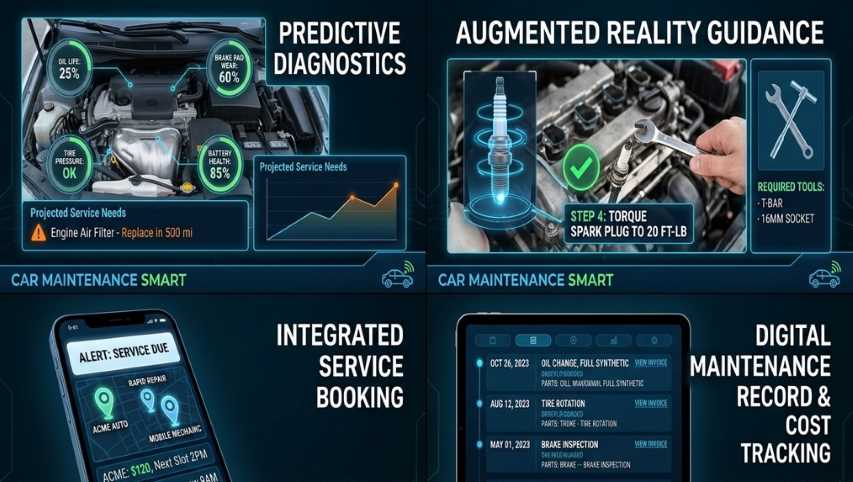
🤔 What is a Car Maintenance Smart Project?
A Car Maintenance Smart Project refers to an ecosystem that integrates the Internet of Things (IoT), Artificial Intelligence (AI), cloud computing, and telematics to create an intelligent vehicle maintenance system. Unlike traditional models where you react to a breakdown or follow a fixed schedule, a smart project focuses on predictive maintenance. It uses real-time data to foresee potential failures before they occur, proactively scheduling repairs and alerting drivers in advance.
This approach turns a vehicle from a passive machine into an active data generator. By analyzing thousands of data points from sensors, smart algorithms can detect subtle anomalies, predict component lifespan, and even automate service bookings—all with the goal of maximizing uptime and safety.
🚗 The Core Technology Stack: How It Works
A smart car maintenance system is built on a three-layered architecture that seamlessly connects the vehicle, the cloud, and the user.
Data Acquisition Layer (The Vehicle)
The vehicle is equipped with numerous data collection points:
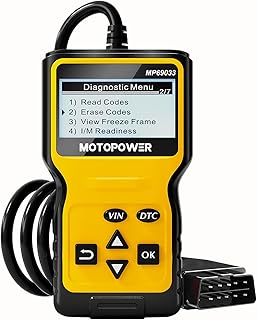
OBD-II Port (On-Board Diagnostics): Since the 1990s, vehicles have included a standard OBD-II interface, which exposes real-time telemetry from the Engine Control Unit (ECU). This provides streams on engine performance, fuel consumption, battery voltage, and emissions. Modern vehicles also use CAN bus networks, which transmit richer data from braking systems, steering components, and ADAS features.
Sensors and Telematics Devices: Smart projects can also incorporate external telematics devices that track location, driver behavior (speed, acceleration, braking), and environmental conditions.
Data Processing Layer (The Cloud and AI Engine)
Raw data is transmitted via 4G/5G or Wi-Fi to a cloud-based analytics platform. This is where the intelligence resides:
Machine Learning Models: These models are trained on historical data to recognize patterns. Advanced systems use Long Short-Term Memory (LSTM) neural networks to analyze time-series data, achieving prediction accuracies over 97.5%.
Anomaly Detection: The system identifies subtle drifts in performance—like a gradual decrease in fuel efficiency or unusual temperature deviations—before a fault code is triggered.
Predictive Algorithms: They analyze fault codes, wear patterns, and external factors (weather, road conditions) to calculate the Remaining Useful Life (RUL) of components.
User Interface Layer (Action)
The processed insights are delivered through user-friendly interfaces:
Mobile Apps and Dashboards: Drivers receive notifications, health reports, and maintenance alerts on their smartphones.
In-Cabin AI Assistants: Advanced systems integrate with in-car voice assistants to provide natural language updates, such as: "Your tire pressure drops every time the temperature falls below 28°F. Should I schedule a check at your preferred service center?"
✨ Key Benefits of a Smart Car Maintenance System
The transition to smart maintenance delivers measurable advantages for individual drivers, fleet operators, and service centers.
🛡️ Proactive Failure Prevention
By detecting early signs of degradation, the system prevents unexpected breakdowns and costly roadside emergencies. This is particularly critical for commercial fleets, where unplanned downtime directly impacts revenue.
💰 Significant Cost Reductions
According to industry analysis, companies adopting predictive maintenance can reduce downtime by up to 30% and maintenance costs by up to 20%. This is achieved by avoiding unnecessary preventive maintenance and reducing expensive emergency repairs.
🔧 Extended Vehicle Lifespan
Regular, data-driven maintenance keeps components operating within optimal parameters, reducing premature wear and tear. This maximizes the vehicle's resale value and delays capital replacement expenses.
🚦 Enhanced Safety
Real-time monitoring of critical systems like brakes, tires, and engine health ensures that safety issues are addressed before they compromise vehicle control, making roads safer for everyone.
⏱️ Optimized Maintenance Scheduling
Instead of fixed schedules based on mileage, smart systems recommend servicing based on actual usage patterns, driving behavior, and environmental conditions. This eliminates wasteful maintenance while ensuring critical tasks are never missed.
🔑 Core Components of a Smart Car Maintenance Project
A comprehensive smart project integrates several specialized tools and platforms.
📡 OBD-II Scanners and Mobile Apps
Consumer-facing solutions allow drivers to transform their smartphones into powerful diagnostic tools. For example, the Infocar app, when paired with a simple OBD-II dongle, provides access to real-time data from over 800 sensors, checks vehicle conditions, reads fault codes, and analyzes driving habits.
📊 Telematics and Fleet Management Platforms
For commercial operations, telematics platforms offer a unified view of an entire fleet.
Bosch FleetME: Leverages live vehicle data and advanced AI analytics for predictive maintenance, identifying needed upkeep, sending alerts, and recommending dynamic repair scheduling.
OnCommand Connection: Provides real-time vehicle health reports and has over 21,000 fault code action plans for engines, transmissions, and more.
Force iPulse: A cloud-native platform that performs root-cause analysis across major subsystems (engine, powertrain, electrical, thermal), allowing fleet operators to take corrective action before breakdowns occur.
🤖 AI Copilots and Diagnostic Assistants
Research envisions AI copilots that integrate with a driver's personal calendar and preferences. If an anomaly is detected, the system can automatically check availability and book a service appointment at a preferred shop, turning a reactive chore into a proactive, seamless experience.
🔧 Smart Garage Management Systems (GMS)
Service centers are also becoming "smart" to support this ecosystem. Solutions like Way.com's AI Repair platform use AI voice agents to answer calls, schedule appointments, and provide instant estimates. Meanwhile, platforms like TechMan digitize workshop operations, replacing manual job cards with digital tracking for real-time visibility and improved customer communication.
🚀 Real-World Smart Maintenance Projects
| Project / Initiative | Organization / Developer | Key Focus | Impact / Status |
|---|---|---|---|
| Intelligent Maintenance System for Legacy Vehicles | IEEE Research | Low-cost OBD-II device to send telemetry to the cloud for analysis, anomaly detection, and failure prediction for older cars. | Validated; successfully identified engine temperature alerts and notified users via smartphone. |
| PolyU Predictive Self-Diagnosis System | Hong Kong Polytechnic University | Universal system using OBD-II, GNSS, cameras, and acoustic sensors; deep fusion and synchronized processing for fault classification and lifespan prediction. | Active project supported by HK$6.19 million Smart Traffic Fund. |
| AI Copilot for Predictive Maintenance | Amazon Lab126 (Research) | Uses machine learning to detect subtle anomalies; fuses vehicle data with contextual signals (calendar, weather, driving routes) to make personalized predictions. | Proposed framework; demonstrates how to turn vehicles into intelligent sensing platforms. |
| Penske Fleet Insight | Penske (Logistics) | Uses AI to analyze real-time data from telematics devices to predict maintenance needs for leasing customers, optimizing fleet uptime. | Operational; part of "How AI Is Changing Everything" series. |
| VOYOLink Connected Car Platform | Voyomotive | SaaS platform allowing owners to connect vehicles remotely to a repair shop with one click, giving shops real-time visibility into vehicle health before it enters the bay. | Operational; includes VOYOTRAK app for real-time insights. |
🧐 Challenges and Considerations for Implementation
While the benefits are clear, deploying a smart maintenance project comes with hurdles.
🔐 Data Privacy and Security
The constant transmission of vehicle location, driving habits, and mechanical data creates significant privacy risks. The proposed solution often involves federated learning (FL), a technique where AI models are trained locally on the vehicle, and only anonymized model weights are shared with the central server, protecting user privacy.
🛠️ Interoperability and Standardization
Data variability is a major challenge. Baseline sensor values can vary widely across manufacturers, models, and even firmware versions. Creating universal models requires massive datasets and standardized communication protocols (like OBD-II).
📈 Initial Investment
For fleet operators, the upfront cost of telematics devices, cloud subscriptions, and staff training can be substantial. However, the return on investment is often realized within 12–24 months through reduced fuel costs and downtime.
👨🏫 User Trust and Adoption
Drivers must trust the system's recommendations. "False positives" (alerts for non-existent issues) can erode confidence, while "false negatives" (missed alerts) defeat the purpose. The system must be highly accurate and transparent in its reasoning.
🔮 The Future of Smart Car Maintenance
The market for automotive predictive analytics is projected to grow from $1.7 billion in 2025 to $5.21 billion by 2030, driven by connected vehicles and AI.
Key trends shaping the future include:
Battery Health Forecasting: For the rapidly growing EV market, AI will predict battery degradation and optimize charging cycles.
Generative AI for Diagnostics: Large Language Models (LLMs) will be used to provide plain-language explanations of complex fault codes and generate repair instructions.
Real-Time Edge Analytics: Processing data directly in the vehicle (at the "edge") rather than in the cloud, enabling instantaneous alerts and reducing latency.
Autonomous Scheduling: Cars will not only predict failures but will independently book service appointments, order parts, and drive themselves to the shop (in autonomous vehicles).
🏁 The Car Maintenance Smart Project represents a fundamental shift from reactive "fix-it-when-it-breaks" models to proactive "predict-and-prevent" ecosystems. By harnessing the power of IoT, AI, and cloud analytics, this project empowers drivers and fleet managers to save money, improve safety, and maximize vehicle lifespan. As sensor technology, machine learning, and connectivity continue to evolve, the vision of a car that acts as its own mechanic—scheduling its repairs and communicating in plain English—is rapidly becoming a reality. The future of automotive care is not just smart; it is predictive.
 |  |  |
 |  |  |