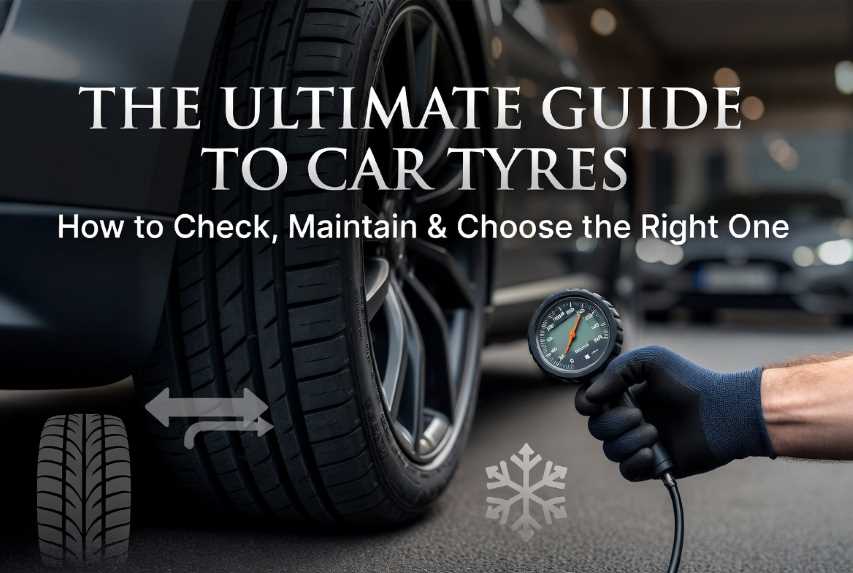
Your tires are the only part of your vehicle that actually touches the road. They are responsible for grip, braking, handling, fuel economy, and your overall safety. Yet, they are often the most neglected component of a car.
This comprehensive guide will walk you through everything you need to know—from simple weekly checks to understanding complex sidewall markings—so you can stay safe, save money, and choose the perfect tires for your driving needs.
Part 1: How to Check Your Tires (Regular Maintenance)
Tires don’t last forever, and they don't always give obvious warning signs before they fail. Regular checks can save your life and your wallet.
📏 Check Your Tire Pressure
Why it matters: Under-inflated tires wear out faster, create excessive heat, increase fuel consumption, and make your car harder to handle. Over-inflated tires are more easily damaged by road debris and may make the car unstable.
How to check:
Find the recommended pressure: This is listed in your owner’s manual or on a sticker usually found inside the driver’s doorjamb, fuel filler flap, glovebox lid, or centre console.
Check when cold: Tire pressure should be checked when the tires are cold (before driving or at least a few hours after driving).
Use a pressure gauge: Remove the valve cap, firmly attach a tire pressure gauge (available at petrol stations or for home use), and read the pressure.
Adjust as needed: Inflate or deflate to match the manufacturer’s recommended PSI (pounds per square inch) or BAR.
Repeat for all tires: Don’t forget the spare tire if you have one.
Replace valve caps: Always put the caps back on to protect against dirt and moisture.
How often: Check tire pressure at least once a month and before any long journey.
👣 Check Your Tread Depth
Why it matters: Tread depth is the vertical measurement of the tire grooves that channel water away from your tires. Worn treads increase braking distances and risk aquaplaning in wet conditions.
The Legal Minimum: In many countries, the legal minimum tread depth is 1.6mm across the central three-quarters of the tire, around its entire circumference. However, most experts recommend not letting the tread drop below 2.5mm to 3mm for optimal safety.
How to check:
Method | How to Do It | What It Tells You |
|---|---|---|
| Tread Depth Gauge | Insert the probe into the main tread grooves at several points across the tire. | Precise measurement in millimeters. This is the most accurate method. |
| 20p Coin Test (UK) | Slide a 20p coin into the main tread grooves. | If you can see the outer rim of the coin, the tread is too shallow and needs replacing. |
| Tread Wear Indicators (TWI) | Look for small, raised rubber bars located within the tread grooves. | If these bars are flush with the surrounding tread, the tire has reached its minimum legal limit and must be replaced. |
👀 Inspect for Visible Damage
Look for:
Cuts, cracks, or bulges on the sidewalls—these can indicate internal damage and could lead to a blowout.
Uneven wear—balding on one edge, scalloping, or cupping could signal alignment, suspension, or inflation problems.
Foreign objects—nails, screws, or stones embedded in the tread.
How often: A quick visual inspection should be done at least once a month when you check your tire pressure.
Common Wear Patterns & Causes (from MTA tire checklist):
Wear Pattern | Most Likely Cause |
|---|---|
| Both shoulders worn | Under-inflation (add more air) |
| Centre ribs or blocks worn | Over-inflation (reduce pressure) |
| One-sided wear | Poor alignment (have wheels aligned) |
| Cupping, scalloping, or bald spots | Wheel imbalance and/or poor alignment (have wheels balanced and aligned) |
| Erratically spaced bald spots | Wheel imbalance or worn shock absorbers |
🔍 Check Tire Age (The DOT Code)
Why it matters: Over time, tire rubber degrades, leading to decreased performance and increased safety risks, regardless of tread depth.
How to check:
Find the DOT code on the tire’s sidewall. It is a series of letters and numbers beginning with "DOT".
Look at the last four digits of this code.
The first two digits represent the week of the year (01 to 52), and the last two digits represent the year of manufacture.
For example: 4714 means the tire was manufactured in the 47th week of 2014.
When to replace: Tires have a maximum lifespan of 10 years from the date of manufacture. However, many experts recommend replacement after 5 to 6 years, and tires older than 10 years should never be used.
Part 2: How to Choose the Right Tires
Once you’ve determined it’s time to replace your tires, you’re faced with a dizzying array of choices. Here’s how to narrow them down.
📝 Know Your Vehicle’s Specifications
Your car already tells you exactly which tires it needs. Always refer to:
Your owner’s manual.
The tire placard (sticker) on the driver’s side doorjamb.
🔢 Decode the Tire Sidewall Markings
The sidewall of every tire contains a string of numbers and letters that tell you everything you need to know about its size and capabilities.
Example: 205/55 R16 91W
| Code | Meaning | Explanation |
|---|---|---|
| 205 | Tire Width (mm) | The width of the tire from sidewall to sidewall. |
| 55 | Aspect Ratio (%) | The sidewall height as a percentage of the width. |
| R | Construction Type | Stands for Radial—the most common type. |
| 16 | Rim Diameter (inches) | The diameter of the wheel rim the tire fits. |
| 91 | Load Index | A numerical code for the maximum weight the tire can carry. |
| W | Speed Rating | A letter code for the maximum speed the tire can safely handle. |
Load Index Examples (from Bridgestone):
Load Index | Max Load (kg) |
|---|---|
89 | 580 kg |
91 | 615 kg |
95 | 690 kg |
Speed Rating Examples (from RAC & National):
Speed Rating | Max Speed (mph) |
|---|---|
H | 130 mph |
V | 149 mph |
W | 168 mph |
Y | 186 mph |
⚠️ Always match or exceed the original load index and speed rating specified by your vehicle manufacturer.
🌦️ Choose the Right Tire Type for Your Climate
Your choice of tire should be based on the temperatures and weather conditions you typically drive in.
Summer Tires: Designed for temperatures above 7°C. They provide the best grip on dry and wet roads, excellent handling, and good fuel economy. They perform poorly in cold or snowy conditions.
Winter Tires: Designed for temperatures below 7°C. They feature deeper tread, more sipes (tiny grooves), and a softer rubber compound that stays flexible in freezing temperatures, providing superior traction on snow and ice. They should be switched back to summer or all-season tires when the weather warms up.
All-Season (4-Season) Tires: A compromise designed for year-round use in moderate climates with mild winters. They are marked with 3PMSF (Three-Peak Mountain Snowflake) if they meet winter performance standards. They are less effective than summer tires in hot conditions and less effective than winter tires in severe winter conditions.
🏎️ Consider Your Driving Style and Budget
Performance Driving: If you drive a sports car or enjoy spirited driving, look for high-performance summer tires with excellent cornering grip.
Everyday Commuting: All-season tires offer a good balance of durability, comfort, and all-weather capability.
Fuel Efficiency: Tires come with an EU tire label rating fuel efficiency (A is best, G is worst). A higher rating can save you money on fuel over the life of the tire.
Budget: Tires are an investment in safety—avoid compromising too much on quality for cost savings. Mid-range brands often offer a good balance of performance and price.
🧠 Frequently Asked Questions
❓ How often should I check my tire pressure?
At least once a month and before any long journey.
❓ What is the legal minimum tread depth?
1.6mm across the central three-quarters of the tire in the UK and many other countries. However, replacing at 2.5–3mm is much safer.
❓ Can I mix different tire brands on my car?
It is highly recommended to fit the same type and size on all four wheels for balance and safety. At a minimum, tires on the same axle should match.
❓ What does the "R" in 205/55 R16 mean?
The "R" stands for Radial construction—the most common type of tire design.
❓ How can I tell if my tires are too old?
Look for the DOT code on the sidewall. The last four digits tell you the week and year of manufacture. Tires older than 10 years should never be used, and replacement after 5–6 years is highly recommended.
❓ Do I really need winter tires?
If you regularly drive in temperatures below 7°C or in snowy/icy conditions, winter tires are strongly recommended. They provide significantly better traction and shorter stopping distances in cold weather compared to summer or all-season tires.
🏁 Your Tires are the only connection between your car and the road. Checking them regularly—pressure, tread depth, and visible condition—is one of the simplest and most important things you can do to stay safe.
When it comes time to replace them, take the time to choose wisely. Match the size, load index, and speed rating required by your vehicle. Choose a tire type (summer, winter, or all-season) that suits your climate. And don’t be afraid to invest in quality—your tires are literally where the rubber meets the road.
💡 Pro Tip: If you’re unsure about any aspect of tire inspection or selection, consult a qualified tire professional. A small investment in expert advice can save you from a costly—or dangerous—mistake
 |  |  |