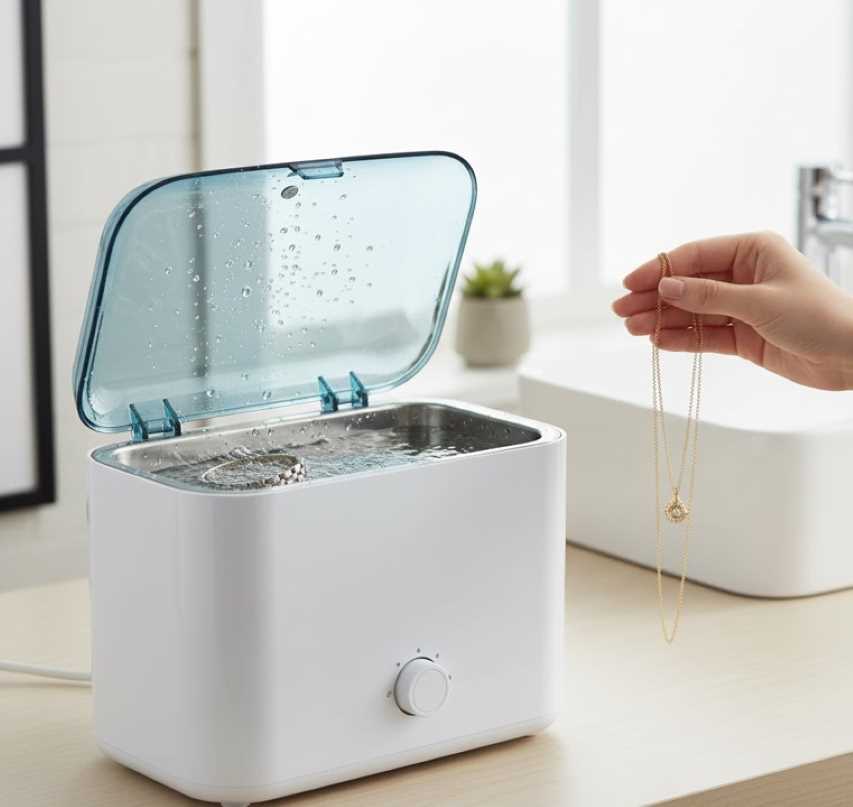
An Ultrasonic Jewelry Cleaner is a compact, professional-grade appliance that uses high-frequency sound waves to perform deep, thorough cleaning of jewelry, eyewear, small metallic parts, and other delicate items. It offers a safe, efficient, and remarkably effective alternative to manual brushing and chemical soaks, reaching into crevices that are impossible to clean by hand.
How It Works: The Science of Cavitation
The core technology is ultrasonic cavitation.
Generation: The device contains a transducer that converts electrical energy into high-frequency sound waves (typically between 25 kHz and 45 kHz). These waves are inaudible to the human ear.
Transmission: These sound waves travel through a water-based cleaning solution inside the unit's stainless steel tank, creating alternating high-pressure and low-pressure cycles.
Cavitation: During the low-pressure cycles, millions of microscopic vacuum bubbles form in the liquid.
Implosion: During the subsequent high-pressure cycles, these bubbles violently collapse (implode) near the surfaces of the submerged items.
Cleaning Action: The energy released by these implosions creates micro-scrubbing jets that dislodge dirt, oil, grime, polishing compounds, and tarnish from even the most intricate settings, tiny pores, and chain links.
Analogy: It’s like millions of tiny, intense scrub brushes working simultaneously on a microscopic level, without any physical contact.
Key Components & Features
Tank: Usually made of durable, corrosion-resistant stainless steel.
Transducer: The piezoelectric component mounted beneath the tank that generates the ultrasonic waves.
Control Panel: Simple interfaces with timers (1-10 minutes), sometimes with heat functions and degas modes.
Basket: A removable plastic or stainless steel tray that holds jewelry, preventing items from touching the tank's bottom and allowing easy retrieval.
Lid: Reduces sound, minimizes solution evaporation, and contains splashes.
Heat Function (Optional): Gently warms the cleaning solution, which can enhance cleaning power for certain types of grime.
What You Can & Cannot Clean
✅ SAFE to Clean (Generally)
Hard Gemstones: Diamonds, sapphires, rubies, cubic zirconia.
Precious Metals: Gold (all karats), platinum, palladium, sterling silver.
Sturdy Findings: Chains, clasps, rings, earring posts, bracelets.
Other Items: Eyeglasses, watches (case and metal bracelet only, not the movement), dentures, coins, metal tools, small instrument parts.
❌ UNSAFE to Clean (Can Cause Permanent Damage)
Soft, Porous, or Fracture-Filled Gemstones:
Pearls (all types), Coral, Ivory, Amber
Emeralds, Opals, Moonstones, Turquoise, Lapis Lazuli, Malachite
Treated gemstones like "fracture-filled" rubies or diamonds.
Delicate Materials: Jet, onyx, cameos, enamel, glued components.
Plated or Costume Jewelry: Ultrasonic waves can strip thin plating.
Mechanical Watches: Never submerge a mechanical watch movement. Only clean sealed case exteriors or separate metal bands.
Golden Rule: When in doubt, leave it out. Consult a jeweler if unsure about a stone's durability.
Step-by-Step Cleaning Process
Prepare: Fill the tank with water or a recommended cleaning solution, typically to the indicated fill line.
Load: Place items in the basket, ensuring pieces do not touch each other or the tank walls.
Submerge: Lower the basket into the tank. Ensure all items are fully immersed.
Set & Run: Close the lid, set the timer (3-6 minutes is standard), and start the cycle.
Rinse & Dry: Remove items, rinse thoroughly under lukewarm water to remove any residual solution, and dry completely with a soft, lint-free cloth.
Choosing & Using Cleaning Solutions
Solution Type | Best For | Notes |
|---|---|---|
| Commercial Jewelry Cleaner | All-purpose; often formulated for specific metals (silver, gold). | Follow brand instructions. Avoid ammonia on porous stones or pearls. |
| Mild Dish Soap & Warm Water | Safe, gentle, and economical for routine cleaning of diamonds and hard metals. | A few drops are sufficient. Creates a mild surfactant solution. |
| Specialty Solutions | Heavy tarnish (silver dip), ultrasonic-specific formulas. | Use with care. Strong chemicals may damage certain stones or settings. |
| Distilled Water Only | Rinsing sensitive items or using with a steam function. | Prevents mineral deposits from tap water. |
Benefits of Using an Ultrasonic Cleaner
Unmatched Deep Cleaning: Replaces hours of tedious hand-scrubbing in minutes.
Reaches the Unreachable: Cleans intricate filigree, pavé settings, and chain links internally.
Non-Abrasive: Safe for polished surfaces as there is no physical scrubbing.
Efficiency: Can clean multiple pieces at once.
Restores Brilliance: Effectively removes built-up oils, lotions, and dirt that dull a gem's fire and sparkle.
Hygienic: Ideal for cleaning items like earrings and dentures.
Limitations & Important Cautions
Not a Miracle Worker: Cannot repair physical damage, remove deep scratches, or fix loose settings. In fact, it may loosen already-compromised prongs.
Stone & Material Risks: As listed above, many delicate materials are incompatible.
Chemical Interaction: The process can accelerate chemical reactions between harsh cleaners and certain metals or stones.
Noise: Produces a high-frequency hum or buzzing sound during operation.
Maintenance & Care of the Cleaner Itself
Empty After Use: Do not leave solution in the tank for extended periods to prevent corrosion or mineral buildup.
Clean the Tank: Wipe with a soft cloth. For residue, run a cycle with a vinegar-water solution, then rinse.
Use the Basket: Always use the provided basket to protect the transducer at the tank bottom.
Descale: In areas with hard water, descale periodically with a citric acid solution.
Choosing the Right Ultrasonic Cleaner: Buyer’s Checklist
Tank Size: Match to your typical items (small for rings, large for chains and multiple pieces).
Timer Range: Look for adjustable settings (1-10+ minutes).
Power & Frequency: Measured in watts; higher watts often mean more powerful cavitation. Frequency affects bubble size and cleaning aggression.
Build Quality: Stainless steel tank, sturdy construction.
Features: Heated function, digital controls, degas mode (removes dissolved air from solution for better performance).
Accessories: Check for included baskets, lids, and solutions.
A Professional Tool for Home Use
An ultrasonic jewelry cleaner is a worthwhile investment for anyone who values the longevity and brilliance of their accessories. By harnessing the power of ultrasonic cavitation, it delivers a level of clean that manual methods simply cannot achieve. Used correctly—with the right solutions and a clear understanding of what not to clean—it is a safe, powerful, and indispensable tool for maintaining the pristine condition of your valuable pieces for years to come. Always remember: when uncertain about an item's suitability, seek professional advice from a trusted jeweler.
 |  |  |
 |  |  |