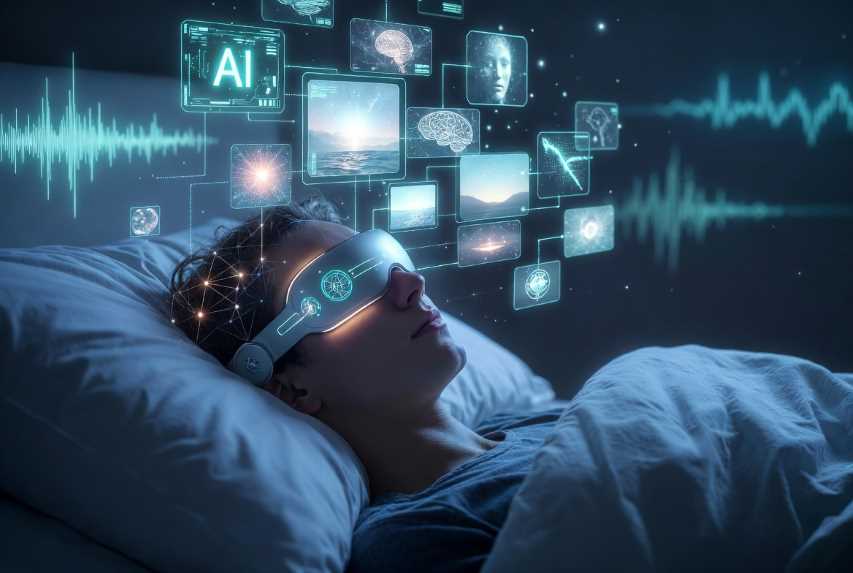
Dreams have long occupied a mysterious space between science, philosophy, and personal experience. The idea that a wearable headset might one day capture the vivid, often bizarre movies playing inside our heads during sleep captures the imagination. Yet the gap between science fiction and laboratory reality remains wide. This article examines the current science of dream decoding, the technologies involved, the decisive role of artificial intelligence, the substantial challenges that remain, and what a practical dream-recording device might eventually look like. Throughout, we carefully separate verified research findings from experimental results and speculative possibilities.
The notion of recording dreams is one of the most compelling ideas in modern neuroscience. For centuries, dreams have been treated as windows into the unconscious, sources of creativity, omens, or mere mental noise. Philosophers from Aristotle to Freud and Jung wrestled with their meaning. Scientists, meanwhile, have sought to understand their biological purpose and neural mechanisms.
Today, advances in brain-computer interfaces (BCIs) and artificial intelligence have moved the conversation from pure speculation toward limited experimental capability. Researchers can, under carefully controlled laboratory conditions, extract coarse information about visual elements present in dreams by analyzing brain activity. These efforts do not yet produce continuous video recordings of dream narratives. They do, however, demonstrate that certain patterns of neural activity during sleep carry decodable information about visual content.
The convergence of high-resolution neuroimaging, machine learning, and portable sensor technology is steadily narrowing the distance between laboratory demonstrations and future consumer devices. Understanding where the science currently stands requires a clear view of both its achievements and its limits.
What Are Dreams?
Dreams are internally generated experiences that occur during sleep and can include vivid imagery, emotions, narratives, and sensory impressions. They arise from coordinated activity across multiple brain systems rather than from external sensory input.
Sleep is divided into non-rapid eye movement (NREM) stages and rapid eye movement (REM) sleep. NREM sleep progresses through lighter stages into deep slow-wave sleep, during which brain activity slows and becomes more synchronized. REM sleep, by contrast, features brain activity patterns that more closely resemble wakefulness. The eyes move rapidly beneath closed lids, muscle tone is largely suppressed (preventing the acting out of dreams), and vivid dreaming is most frequent and intense.
During REM sleep, regions involved in emotion (such as the amygdala), memory (hippocampus), and visual processing show heightened activity, while areas associated with logical reasoning and self-monitoring are relatively less active. This combination helps explain why dreams often feel emotionally charged, visually rich, and logically inconsistent.
Dreaming is not exclusive to REM. High-density EEG studies have shown that dreams can also occur during NREM sleep, particularly when local reductions in slow-wave activity appear in posterior brain regions. In these cases, the brain appears partially “awake” in selected areas while other regions remain in deeper sleep.
Memory and emotion are tightly intertwined with dreaming. Sleep, especially REM, supports the processing of emotional experiences and the consolidation of certain types of memory. One leading hypothesis suggests that dreams allow the brain to reprocess recent events and emotional memories in a relatively safe internal environment, stripped of the usual waking levels of stress-related neurotransmitters.
Why we dream remains an open scientific question. Proposed functions include memory consolidation, emotional regulation, threat simulation, creative problem-solving, and the maintenance of neural circuits. No single explanation accounts for all observed dream phenomena, and many researchers view dreaming as the subjective experience accompanying certain patterns of brain activity rather than a single purposeful process.
Did You Know? Most people experience multiple dream episodes each night, yet we typically remember only a fraction of them. Dream recall is strongly influenced by the sleep stage from which a person awakens and by individual differences in memory systems.
Can Technology Really Record Dreams?
The short answer is no—not in the sense of capturing a complete, high-fidelity video of a dream narrative that can be replayed like a film. Current technology cannot convert the full subjective experience of a dream into a continuous audiovisual record.
What researchers can achieve is more modest and carefully bounded. In laboratory settings, scientists have shown that brain activity patterns recorded during sleep can be analyzed to identify broad visual categories (for example, whether a dream contained a person, an object, or a particular scene type) with above-chance accuracy. In some experimental paradigms, machine-learning models trained on waking visual experiences can generate approximate, often blurry or stylized reconstructions of visual elements present during sleep onset or brief dream reports.
It is essential to distinguish three related but different concepts:
Brain activity interpretation involves mapping neural signals to known categories or features.
Dream content classification attempts to determine the presence of specific types of content (objects, faces, motion, etc.).
True dream recording would require continuous, high-resolution reconstruction of the entire multimodal experience, including narrative structure, emotions, and sensory details. This capability does not yet exist.
Most successful demonstrations rely on functional magnetic resonance imaging (fMRI) inside large, expensive scanners under tightly controlled conditions. Participants are often awakened shortly after dream onset so that their verbal reports can be compared with decoded signals. These methods are powerful research tools but remain distant from everyday wearable technology.
Research Spotlight In a landmark 2013 study, researchers used fMRI and EEG to decode visual content during sleep onset. They achieved roughly 60 percent accuracy in identifying broad categories of dream imagery that matched participants’ subsequent verbal reports. Later work has refined reconstruction techniques, yet the results remain approximate rather than photographic.
How Dream-Decoding Technology Works
Dream decoding depends on measuring brain activity and then using computational models to interpret that activity. Several neuroimaging and sensing methods contribute:
EEG (Electroencephalography) records electrical activity from the scalp using electrodes. It offers excellent temporal resolution (millisecond scale) and can be made relatively portable, but spatial resolution is limited. EEG is useful for detecting sleep stages and certain neural signatures of dreaming.
fMRI (Functional Magnetic Resonance Imaging) measures changes in blood oxygenation that reflect neural activity with relatively good spatial resolution. It has been central to most high-profile visual reconstruction studies. The machines are large, loud, expensive, and require participants to lie still inside a powerful magnet—conditions poorly suited to natural sleep.
MEG (Magnetoencephalography) detects the magnetic fields produced by neural currents. It combines good temporal resolution with better spatial resolution than EEG and has been used in real-time visual decoding experiments.
Brain-computer interfaces (BCIs) more broadly encompass any system that translates neural signals into usable information or commands. Non-invasive BCIs rely on external sensors; invasive versions use implanted electrodes and offer higher signal quality at the cost of surgical risk.
Neural decoding is the process of extracting meaningful information from measured brain signals. It typically involves training statistical or machine-learning models that learn the relationship between patterns of activity and known stimuli or reported experiences.
Artificial intelligence, particularly deep learning and pattern-recognition algorithms, performs the heavy computational work of finding subtle, high-dimensional relationships in noisy neural data.
In a typical experimental pipeline, researchers first collect large amounts of brain data while participants view known images while awake. Models learn to map neural patterns to visual features. Those models are then applied to data recorded during sleep, and the outputs are compared with dream reports or used to generate approximate images.
The Role of Artificial Intelligence
Artificial intelligence has transformed neural decoding from a laborious, low-accuracy process into a field capable of producing recognizable reconstructions. Deep neural networks excel at discovering hierarchical patterns in complex data. In the context of brain activity, they can identify features corresponding to edges, objects, scenes, and higher-level semantic categories.
AI systems analyze large volumes of neural recordings, learn statistical relationships between brain signals and visual or semantic content, and then generate predictions or reconstructed images. Generative models, including those based on diffusion techniques, have been particularly effective at producing plausible images from decoded neural features. Some approaches first predict intermediate representations (such as text captions or latent visual codes) and then use those to guide image generation.
Personalization is another important contribution. Because individual brains differ in anatomy and functional organization, models trained on one person often perform poorly on another. AI techniques that adapt models to individual neural signatures improve accuracy. Over time, continuous data collection could allow a system to refine its understanding of a specific user’s brain patterns.
AI also helps overcome the low signal-to-noise ratio of non-invasive recordings by learning robust representations that ignore irrelevant variation. The result is progressive improvement in decoding performance, though still far from perfect fidelity.
Future Possibility as AI models grow more sophisticated and training datasets expand, the fidelity of reconstructed visual content is expected to increase. Real-time or near-real-time decoding of certain features may become feasible with improved sensors and faster computing.
Current Research and Breakthroughs
Research has progressed along several complementary lines. Early work focused on classifying the presence of specific visual categories during sleep onset. Subsequent studies applied deep learning to reconstruct images from fMRI data collected while participants viewed pictures while awake; some of these methods have been extended, with reduced accuracy, to dream states.
Brain-to-image reconstruction has advanced notably through the combination of fMRI data with modern generative AI. Researchers have produced recognizable approximations of viewed objects, scenes, and faces. Parallel efforts in brain-to-text decoding have shown that certain semantic content can be extracted from neural signals, raising the possibility of eventually capturing narrative elements of dreams.
Non-invasive BCI research continues to improve the quality of signals obtainable outside large scanners. Wearable EEG systems and emerging sensor technologies offer greater comfort and portability, though they currently provide less detailed information than fMRI.
Limitations remain significant. Most high-quality results require hours of individual calibration data, controlled laboratory environments, and post-processing rather than real-time output. Accuracy drops substantially when moving from simple category classification to detailed scene reconstruction, and further still when moving from waking perception to spontaneous dreams. Continuous narrative reconstruction of full dream episodes has not been demonstrated.
Research Spotlight Studies using generative AI paired with fMRI have reconstructed approximate images of what participants were viewing while awake, preserving high-level features such as object category and spatial layout. Applying similar methods to sleep data yields coarser but still informative results consistent with dream reports in some experiments.
Could a Wearable Headset Record Dreams?
A practical dream-recording headset remains speculative, yet its conceptual components can be outlined from existing technology trends. Such a device would likely combine multiple sensing modalities—comfortable EEG electrodes or next-generation non-invasive sensors capable of capturing richer neural signals, perhaps supplemented by other physiological measures such as eye movement, heart rate, and muscle tone.
Onboard or edge AI processors would perform initial signal processing and feature extraction. More computationally intensive decoding and image or narrative reconstruction would likely rely on cloud computing resources, with results returned to a companion mobile application. The app could support sleep-stage tracking, automatic detection of dream-rich periods, and a digital dream journal that stores decoded content alongside user annotations.
Over time, the system would build a personalized neural model for each user, improving decoding accuracy through repeated use. Integration with existing sleep-tracking ecosystems would allow users to correlate dream content with sleep quality, lifestyle factors, and subjective reports.
No such commercial product exists today. The technical barriers—signal quality, power consumption, comfort during multi-hour sleep, real-time processing, and reliable interpretation of spontaneous dream activity—remain substantial.
Future Possibility Miniaturized, high-density sensors combined with highly efficient neural networks could eventually enable overnight recording and morning review of approximate dream content. Early versions would likely focus on emotional tone, dominant visual categories, or key objects rather than cinematic playback.
Challenges and Limitations
Several fundamental obstacles stand in the way of reliable dream recording.
Brain signals measured non-invasively are relatively low-resolution and noisy compared with the complexity of subjective experience. Individual differences in brain anatomy and functional organization mean that models trained on one person transfer poorly to others. Extensive per-user calibration is typically required.
Privacy and ethical concerns are profound. Neural data can reveal sensitive information about emotions, preferences, and mental states. Questions of consent, data ownership, security against breaches, and potential misuse must be addressed before widespread deployment.
Accuracy remains limited. Even the best current reconstructions are approximate and can misrepresent content. Cost and accessibility further restrict the technology: high-quality neuroimaging is expensive and confined to research or clinical settings.
Potential Applications
If the technical and ethical challenges can be overcome, dream-decoding technology could serve multiple domains.
In medical research and clinical practice, it might aid the study and diagnosis of sleep disorders, provide new windows into PTSD and trauma-related dreaming, and support mental-health monitoring. Neuroscience would gain unprecedented tools for investigating the neural basis of consciousness and subjective experience. Creativity research could explore the sources of novel ideas that emerge in dreams. Educational applications might one day help students understand memory and learning processes more deeply. In entertainment and virtual reality, reconstructed dream content could inspire immersive experiences or artistic works.
These applications remain largely prospective and depend on substantial further progress in both technology and governance.
Ethical and Privacy Considerations
Mental privacy is a core concern. Unlike external behavior or even genetic data, brain activity is intimately tied to a person’s inner life. Unauthorized access or compelled decoding could undermine autonomy and dignity.
Informed consent must be meaningful, ongoing, and free from coercion. Ownership of neural data—whether it belongs to the individual, the device manufacturer, or a research institution—requires clear legal frameworks. AI systems trained on neural data can inherit or amplify biases present in training sets, potentially leading to unequal performance across demographic groups.
Data protection standards must be exceptionally high given the sensitivity of the information. Responsible innovation demands proactive attention to potential misuse, including surveillance, commercial exploitation of emotional states, or discriminatory applications.
Did You Know? Some jurisdictions have begun exploring “neurorights” concepts that explicitly protect mental privacy and cognitive liberty in the face of advancing neurotechnology.
Science Fiction vs. Scientific Reality
Popular media often portrays dream recording as seamless video playback or even interactive dream worlds. Films and television series frequently depict characters plugging into devices that capture, edit, or share entire dream sequences with cinematic clarity.
In reality, current laboratory capabilities produce coarse classifications or approximate, often abstract visual reconstructions under highly controlled conditions. Continuous, high-fidelity, multimodal recording of spontaneous dreams does not exist. Common misconceptions include the belief that consumer headsets already available for sleep tracking can decode dream content, or that AI can currently “read minds” in a general sense. Existing systems decode limited, statistically associated features rather than private thoughts or full experiences.
The trajectory of research suggests gradual improvement rather than sudden breakthroughs into science-fiction territory.
Future Outlook
Looking ahead, several technological trends could accelerate progress. Next-generation non-invasive BCIs may deliver richer signals through improved sensor materials, higher electrode density, or novel measurement techniques. AI models continue to advance in their ability to extract meaningful structure from noisy data and to generate coherent multimodal outputs. Miniaturization of sensors and processors, combined with efficient edge computing, could make comfortable overnight wearables feasible.
Personalized neurotechnology—systems that continually adapt to an individual’s unique brain patterns—will likely be essential. Real-time or near-real-time decoding of selected features may become possible long before full narrative reconstruction. Hybrid approaches that combine neural data with physiological signals and user feedback could further improve reliability.
The timeline for practical consumer devices remains uncertain and will depend as much on ethical and regulatory progress as on technical achievement.
Future Possibility Within the coming decades, specialized clinical or research systems may routinely provide approximate visual and emotional summaries of dream content. Broader consumer availability would require solving comfort, accuracy, privacy, and cost challenges simultaneously.
Frequently Asked Questions (FAQ)
Can we record dreams today? No. Researchers can extract limited information about visual categories or approximate images under laboratory conditions, but continuous, high-fidelity dream recording is not possible.
Is there a dream-recording headset available? No consumer or clinical headset currently records or reconstructs dream content in a usable form. Existing wearable sleep trackers monitor stages and movement but do not decode dream imagery or narratives.
How accurate is dream decoding? Accuracy varies by method and content type. Category classification has reached roughly 60 percent or higher in some studies. Detailed visual reconstruction remains approximate and far less reliable, especially for spontaneous dreams.
Is the technology safe? Non-invasive methods such as EEG are considered safe for research use. fMRI involves strong magnetic fields and is conducted under medical supervision. Any future wearable would need rigorous safety validation for prolonged overnight use.
Can AI read minds? Current AI systems do not read minds in the popular sense. They decode statistically associated patterns from brain activity related to perception, imagery, or reported experiences. Private thoughts, intentions, and full subjective experience remain inaccessible.
How long until dream recording becomes practical? No reliable timeline exists. Meaningful laboratory advances continue, but practical, accurate, privacy-respecting consumer technology is likely many years away and depends on both scientific and societal progress.
The science of dream decoding has moved from pure speculation into the realm of careful experimental demonstration. Researchers can extract limited, meaningful information about visual content from brain activity during sleep, and artificial intelligence has greatly improved the interpretation and reconstruction of that information. These achievements represent genuine progress in understanding the neural basis of subjective experience.
At the same time, the distance between current laboratory results and a consumer headset that records dreams like a personal video camera remains large. Signal quality, individual variability, accuracy limitations, privacy risks, and ethical questions all require substantial further work. Distinguishing verified findings from experimental results and future possibilities is essential for realistic expectations.
The ongoing dialogue between neuroscience, artificial intelligence, and society will shape whether and how dream-related technologies eventually enter daily life. Curiosity about the inner world of sleep continues to drive research that deepens our understanding of the brain—one of the most complex systems known.
 |  |  |
 |  |  |