
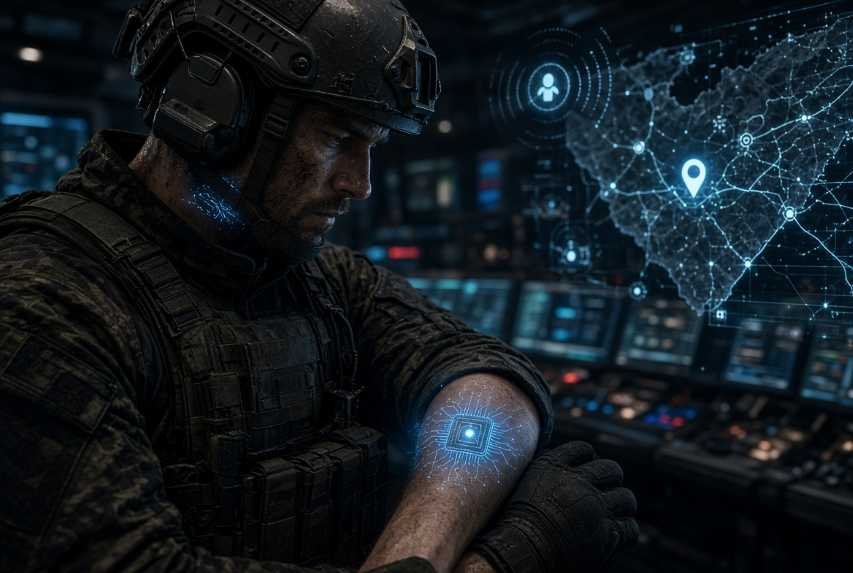
In the high-stakes world of Special Ops: Lioness, the line between operational necessity and invasive technology is deliberately blurred. The Paramount+ series follows CIA case officers and military operators conducting deniable missions against terrorist networks and foreign intelligence services. One of its most striking recurring concepts is the use of tiny implanted tracking devices. In Season 3, this idea moves from background detail to central plot driver.
When Joe McNamara is abducted in broad daylight, her captors conduct a thorough search of her body. After prolonged interrogation, she reveals that a tracking implant is located in the big toe of her left foot. The device is surgically removed. Her team, monitoring the signal, arrives at the location only to find the extracted implant and no operator. Earlier, a similar device had been cut from the armpit of a captured Russian operative. The series presents these implants as discreet, always-available tools that allow a Quick Reaction Force to locate personnel who have gone missing or been taken. They serve both dramatic and practical narrative functions: raising the personal stakes of capture while giving the team a technological means of attempting recovery.
The concept is not unique to Lioness. Hollywood has long depicted special forces and intelligence officers carrying hidden trackers. What makes the series notable is the specificity of the portrayal—subdermal placement, resistance to ordinary searches, and real-time signaling that a team can follow. The story raises a straightforward question that extends well beyond entertainment: is this technology already available to real militaries and intelligence services, or does it remain science fiction constrained by physics, biology, and engineering limits?
Governments have clear operational reasons to want better location awareness of their personnel. Missing soldiers after ambushes, wounded operators who cannot call for help, intelligence assets operating alone in hostile territory, and units dispersed across complex urban or underground environments all create situations in which real-time positional data could save lives and improve mission outcomes. The desire is rational. Whether the specific solution of a permanent implanted tracker is technically feasible, ethically acceptable, or operationally wise is a separate and more complicated matter.
How Would an Implanted Tracking Device Actually Work?
A device capable of independently determining a person’s location and transmitting that information over meaningful distances is not a single component. It is a miniature system that must perform several distinct functions under severe constraints.
Positioning systems. Global Navigation Satellite Systems (GNSS), of which GPS is the most widely known, work by measuring the time of arrival of signals from multiple satellites. A receiver must have a clear enough view of the sky, sufficient antenna sensitivity, and enough processing power to calculate a fix. Other positioning methods include cellular network triangulation, Wi-Fi fingerprinting, and, in some military contexts, inertial navigation or specialized radio beacons. Each has different accuracy, power, and infrastructure requirements.
Communication. Once a position is known, it must be sent somewhere. Cellular networks are the most common civilian method, but they require a modem, an antenna, and network authentication. Satellite communications offer broader coverage at higher power and cost. Short-range radios (Bluetooth, proprietary military waveforms, or simple RF transmitters) can reach a nearby teammate, vehicle, or aircraft, but not a distant headquarters.
The critical distinction between a SIM card and a tracking implant. A SIM card is a small secure element that stores a subscriber identity and cryptographic keys so a device can authenticate to a mobile network. By itself it has no radio, no positioning capability, no processor for calculating location, and no power source. Implanting a SIM card under the skin would produce no tracking function whatsoever. Any real tracking system would still need a complete radio transceiver, positioning hardware, antenna, microcontroller, power management, and energy source. The SIM is merely one small authentication component within a much larger and more demanding system.
Other relevant technologies. Passive RFID and NFC tags are powered by the electromagnetic field of a nearby reader and reply with a unique identifier. They are extremely small and require no battery, but their range is typically centimeters to roughly a meter. Bluetooth Low Energy and ultra-wideband can support longer (but still limited) ranges with very low power when used for proximity or short-burst communication. None of these, in their current implantable forms, independently calculate and report a global position.
Power and energy. Continuous or frequent GPS fixes plus radio transmission consume significant energy relative to the volume available inside the body. Battery-powered designs are limited by chemistry and size. Battery-free or energy-harvesting approaches draw power from body heat, motion, ambient radio frequency, or external sources (inductive coupling, ultrasound, or magnetic fields). All remain constrained in the amount of usable power they can deliver for sustained operation.
What Actually Exists Today?
Real implantable and wearable technologies can be grouped into clear categories that should not be conflated.
Passive human microchip implants. Devices roughly the size of a grain of rice (approximately 12 mm long and 1–2 mm in diameter) have been commercially available for years. They are passive RFID or NFC chips encased in biocompatible glass or polymer. When a reader is brought close, the chip returns a unique number. In 2004 the U.S. Food and Drug Administration cleared the VeriChip system for use as a patient identifier that could link to medical records. A limited number of people received the implants, including some hospital patients and, in a few high-profile cases, security or VIP applications. Commercial marketing of the human implant largely ended around 2010 because of limited demand and privacy concerns. Similar chips continue to be used by biohackers and some employees in Sweden and elsewhere for building access, transit tickets, and contactless payments. Thousands of such voluntary implants exist. They are proven identification tools. They are not location trackers.
Medical implantable devices with wireless functions. Pacemakers, implantable cardioverter-defibrillators, and certain neurostimulators have used short-range inductive or radio telemetry for decades so clinicians can adjust settings and download data. More recent injectable biosensors, such as those developed by Profusa, are designed to integrate with tissue and continuously monitor biochemical markers such as tissue oxygen. DARPA and the U.S. Army Research Office have funded work on implantable sensors for soldier-relevant biomarkers (stress hormones, inflammation markers, metabolic indicators). These efforts focus on health and readiness monitoring, not geolocation. Most still require an external reader or wearable gateway for data retrieval.
Military location and situational-awareness systems. The U.S. military and its allies have fielded mature GPS-based tracking for more than two decades. Blue Force Tracking systems (and their successors such as the Joint Battle Command-Platform) equip vehicles and some dismounted forces with GPS receivers and satellite communications. Positions are shared across a network so commanders and units see a common operational picture of friendly forces. Smartphone- and tablet-based applications such as the Android Team Awareness Kit provide similar capabilities at the individual level. These systems are external, rechargeable or vehicle-powered, and under the control of the user or unit. They can be turned off, removed, or discarded.
Laboratory and early-stage research. Work continues on smaller antennas that can function inside tissue, ultra-low-power radios, energy-harvesting implants, and hybrid systems in which a tiny implant communicates only with a nearby wearable device that then handles longer-range transmission. Injectable magnetoelectric and ultrasonic power-transfer techniques have shown promise in research settings for delivering energy deep into tissue with less heating than traditional radio-frequency methods. None of these have produced an operational, continuous, precise, long-range location implant suitable for routine military use.
Public technical analyses of the Lioness depiction, including commentary from former intelligence professionals, consistently describe routine implanted GPS trackers in operatives as fiction. There is no verified public evidence that such systems are fielded.
Concrete Examples and What They Actually Do
VeriChip / VeriMed. Developed by Applied Digital Solutions (later associated with Digital Angel and PositiveID), this passive RFID implant received FDA clearance in 2004 specifically for patient identification. A scanner held near the skin read a unique ID that could pull up medical information from a database. A small number of emergency departments tested the concept. Related demonstrations included temperature-sensing variants. The product did not achieve broad adoption and human implant marketing was discontinued. It remains a clear historical example of an FDA-cleared implantable identification device that never became a tracker.
Biohacking and voluntary implants. Companies such as Biohax International and Dangerous Things have supplied NFC and RFID implants to thousands of individuals. Common uses include unlocking doors, paying for transit or vending-machine purchases, and storing small amounts of personal data. The implantation procedure is minor and the devices are removable. Range remains short and the chips are passive. Infection, though uncommon when proper technique is used, has been documented in case reports.
Blue Force Tracking. Fielded in the early 2000s and used extensively in Iraq and subsequent operations, these systems combine a GPS receiver, satellite terminal, and mapping software. Friendly forces appear as blue icons; reported enemy positions can be added manually. Later versions improved update rates and data capacity. The systems demonstrably reduced friendly-fire incidents and improved coordination. They are not implanted and require external power and antennas.
Profusa tissue-integrated biosensors. These injectable hydrogel sensors are designed to remain in tissue for extended periods while reporting biochemical data optically to an external reader. DARPA funding supported development for potential continuous monitoring of soldier physiology. The technology addresses some foreign-body response issues that plague traditional implants. As of 2026 it remains oriented toward medical and research applications rather than operational geolocation.
Wearable and smartphone-based military health monitoring. DARPA’s Warfighter Analytics using Smartphones for Health (WASH) program explored passive use of existing phone sensors to assess readiness. Other efforts have examined smart textiles and body-worn sensors. These approaches avoid surgical implantation entirely.
Potential Military Benefits If the Technology Matured
A reliable, secure implanted system could theoretically support several missions. Locating isolated or wounded personnel after an ambush or aircraft incident would be faster if a last-known position and vital-signs status were available. Search-and-rescue teams could prioritize areas with higher confidence. Special operations and intelligence units operating with minimal external equipment might benefit from a backup means of signaling distress or confirming identity. Continuous or periodic health monitoring could detect dehydration, extreme stress, or exposure to chemical or biological agents before symptoms become obvious to the individual.
Conventional forces could use aggregated, anonymized data for unit readiness assessments. Counterterrorism and hostage-rescue units might gain an additional tool for tracking high-value assets or friendly personnel inside denied areas. In all cases, the theoretical advantage is permanence and concealment: the device cannot be forgotten, lost, or easily stripped away like a radio or phone.
Real systems already pursue most of these goals through wearables, vehicle trackers, and robust communications. The incremental benefit of an implant would have to outweigh its permanent nature, surgical requirements, and loss of user control.
Technical Challenges and Why Size Alone Is Not the Answer
Several independent physical and biological barriers currently prevent a practical continuous GPS implant.
Miniaturization and power density. Commercial GPS trackers small enough to conceal on a person are still measured in centimeters and rely on batteries that provide only days of real-time tracking or weeks to months of infrequent updates. Further reduction quickly eliminates either the antenna performance, the energy storage, or both. Energy-harvesting methods can extend life but rarely supply the sustained power needed for repeated GPS acquisitions and transmissions.
Signal propagation through tissue. Human tissue is a lossy dielectric. At GPS L1 frequencies near 1.575 GHz, absorption and reflection significantly weaken signals that are already extremely faint after traveling from orbit. An antenna inside the body has reduced efficiency and an obstructed view of the sky. Indoor, underground, or dense urban environments compound the problem for any satellite-based system.
Antenna design. Efficient antennas at relevant frequencies have minimum practical sizes. Placing them inside conductive tissue detunes them and reduces gain. Research into novel materials and non-traditional coupling methods (magnetic, ultrasonic, or body-channel communication) seeks to mitigate this, but performance remains limited compared with external antennas.
Biocompatibility and long-term reliability. Any chronic implant must avoid chronic inflammation, fibrous encapsulation that isolates it electrically, corrosion, and mechanical failure from movement. Materials such as medical-grade titanium, specialized polymers, and certain hydrogels have long track records in other devices, yet adding active radio and positioning electronics increases complexity and potential failure modes. Infection risk, though low for well-performed procedures, is never zero.
Cybersecurity and adversarial environments. An implant that can be read or commanded remotely becomes a potential intelligence target. Jamming, spoofing, or physical extraction (as dramatized in the series) are straightforward countermeasures once an adversary knows or suspects the device exists. Encryption and authentication add further power and processing overhead.
These constraints explain why simply “putting a GPS chip and a SIM under the skin” does not produce a working tracker. The supporting hardware, power, and antenna requirements dominate the design.
Privacy, Ethics, Consent, and Human Rights Considerations
Even if the engineering problems were solved, implantation would remain controversial.
Military personnel already accept substantial limits on privacy and autonomy as conditions of service. Required vaccinations, fitness standards, and operational tracking via external systems are established. A permanent implant differs because it cannot be removed at the end of a shift or mission without a medical procedure, and because it could continue functioning (or be queried) outside operational contexts.
Key questions include whether acceptance could be made a condition of assignment to certain units, how informed consent would be documented, who would control access to location and physiological data, how long data would be retained, and what safeguards would prevent misuse for disciplinary surveillance or post-service monitoring. The risk that an implant could be hacked, cloned, or used by an adversary to locate personnel is both a security and a human-rights concern.
Perspectives differ. Some military ethicists and operators argue that voluntary implants for the highest-risk roles could be justified if they demonstrably improve survival rates and if strong technical and policy controls are in place. Medical professionals emphasize infection risk, long-term biocompatibility data requirements, and the difficulty of true informed consent under hierarchical pressure. Human-rights advocates stress bodily autonomy, the potential for function creep, and the precedent that could later be applied to other populations. No broad consensus exists, and current public evidence indicates that location-tracking implants are not in routine use.
Fiction Versus Reality: A Direct Comparison
Technology or capability | Portrayal in Lioness | Closest real-world equivalent | Current status | Principal limitations |
Subdermal continuous location tracker | Small implant in toe or armpit; real-time team tracking | Passive RFID/NFC ID chips; external Blue Force Tracking | Passive chips exist and are used voluntarily; no operational GPS implants | Tissue attenuation of GPS signals; power and antenna size |
Resistance to ordinary search | Hidden until deliberately revealed | Grain-of-rice RFID possible to conceal | Proven for passive devices | Active transmitters are larger and more detectable |
Signal followed by rescue team | Team homes in on device | Standard with any removable GPS or beacon | Mature operational practice | Device can be removed, jammed, or left as decoy |
Combined health and location data | Implied operational awareness | Experimental biosensors + separate wearable GPS | Biosensors in research/early medical use | Not integrated into single long-range location implant |
Permanent, always-available | Cannot be forgotten or easily stripped | External systems that can be controlled or discarded | External systems widely fielded | Permanence removes user control and creates extraction issues |
The series is most plausible if the depicted device is interpreted as a short-range passive or semi-passive beacon whose position is resolved by nearby friendly assets, rather than as a self-contained global GPS tracker. The latter remains beyond demonstrated capability.
The Next Five, Ten, and Twenty Years
In the next five years, the most probable advances are incremental improvements in biocompatible biosensors, better energy harvesting for low-duty-cycle implants, and hybrid architectures in which a tiny implant talks only to a body-worn or vehicle gateway that handles power-hungry GPS and long-range communication. Medical applications will continue to lead military ones because regulatory pathways and clinical data requirements are clearer.
Within ten years, more reliable tissue-integrated sensors for multiple biomarkers and modestly improved in-body antennas or alternative coupling methods (ultrasound, magnetoelectric) may reach higher readiness levels. Secure, low-power body-area networks could become practical for special operations medical monitoring. Continuous, precise, independent global location from a fully implantable device will still face the same core physics constraints.
Over a twenty-year horizon, further gains in power density, materials science, and ultra-low-power electronics could enable intermittent or on-demand location reporting from smaller implants, particularly if paired with external infrastructure. Fully autonomous, always-on, high-accuracy global tracking implants remain speculative and would require simultaneous breakthroughs that are not guaranteed. Wearable and vehicle-based systems, continuously improved, are likely to remain the practical backbone of military location awareness.
What Technology Can and Cannot Do Today
Modern science and engineering support passive human microchip implants for identification and short-range functions, highly capable external GPS tracking systems used daily by military forces, and a growing set of experimental implantable biosensors aimed at health monitoring. They do not support a miniature, self-contained implant that can continuously determine and transmit a soldier’s precise location over long distances with the reliability shown in Special Ops: Lioness.
Closing that gap would require concurrent advances in energy storage or harvesting at extreme miniaturization, antennas or alternative transducers that work efficiently inside tissue, ultra-low-power positioning and communication electronics, proven long-term biocompatibility, and robust security architectures. Until those conditions are met, real-world tracking of military personnel will continue to rely on systems that can be powered, controlled, updated, and, when necessary, removed or discarded by the people who carry them.
The series uses implanted trackers effectively as a dramatic device. Understanding the actual state of the technology clarifies where compelling fiction ends and where the harder constraints of physics, biology, and ethics begin.
 |  |  |