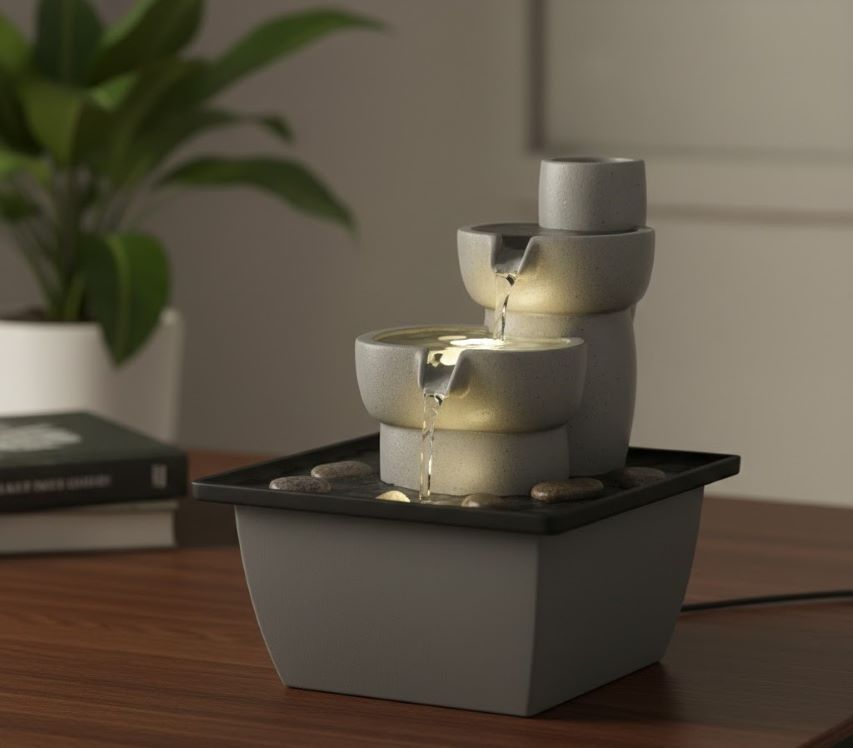
An In-Depth Guide to Your Personal Miniature Oasis
A Tabletop Water Fountain is far more than a mere ornament; it is a compact, self-contained ecosystem of sight and sound, engineered to introduce the serene essence of nature into any indoor space. Designed to reside on surfaces such as desks, bookshelves, console tables, nightstands, or reception counters, it serves as a dynamic focal point that engages the senses. By harmoniously blending the visual poetry of flowing water with the auditory blanket of its gentle sounds, it transforms ambient atmosphere, turning a simple room into a sanctuary of calm and a cluttered office into a haven for focus.
The Engineering of Serenity: How It Works
Beneath its often artistic exterior, a tabletop fountain operates on elegantly simple, reliable principles of recirculation. Understanding its mechanics demystifies its function and underscores its efficiency.
The Reservoir: This is the fountain's foundation, a basin or hidden compartment that holds a discreet volume of water, typically ranging from a half-liter to three liters. Its design is crucial for stability and water capacity.
The Submersible Pump: The heart of the fountain. This small, electric pump sits submerged in the reservoir. Modern pumps are remarkably quiet, energy-sipping devices, often running on low-voltage DC power (5V-12V). Their flow rate is usually adjustable via a small dial, allowing control over the water's vigor and sound.
The Delivery System: A flexible tube, carefully concealed within the fountain's structure, channels water from the pump’s output to the designated starting point of the water feature.
The Sculpted Flow: Here, design meets function. The water is released to interact with the fountain's form—whether it’s pouring from a bamboo spout, sheet-flowing down a slate face, dribbling between stacked ceramic tiers, or bubbling up through a bed of polished stones.
The Closed Loop: Gravity pulls the water back down into the reservoir, where the pump draws it in again. This continuous cycle means water is conserved, requiring only occasional topping off due to evaporation. Power is typically supplied via a USB connection to a computer, power bank, or a standard wall adapter, making it a safe and portable feature.
A Tapestry of Materials and Design Philosophies
The aesthetic diversity of tabletop fountains is vast, allowing them to serve as perfect complements to any interior design theme, from minimalist to eclectic.
Material Palette & Character:
Natural Stone (Slate, Granite, Sandstone, Marble): These fountains offer unmatched organic texture and weight. Each piece is unique, with natural color variations and grain. They evoke solidity, permanence, and a deep connection to the earth. Their porous nature sometimes requires sealing, and they are generally heavier than other types.
Ceramic & Porcelain: The artist’s canvas. These materials allow for glazed colors, intricate hand-painted details, and smooth, sculptural forms. They can range from rustic, terracotta-style pots to sleek, modern abstract shapes. They are relatively fragile and require careful handling.
Bamboo & Wood: Synonymous with Zen and tranquility. Bamboo fountains often feature a classic "shishi-odoshi" (deer scarer) design or simple spouts. Wood brings warmth and a natural, Scandinavian or rustic feel. These materials need protection from constant moisture to prevent warping or mold.
Resin & Polymer: The champions of versatility and affordability. Resin can be molded into incredibly detailed forms—realistic rock formations, Celtic knots, sleeping cats, or contemporary spirals. It's lightweight, durable, and often incorporates actual stones or fibers for a hybrid, realistic look.
Metals (Copper, Stainless Steel, Bronze): For a modern or industrial aesthetic. Copper develops a beautiful verdigris patina over time, adding a living finish. Stainless steel offers a cool, clean, and reflective surface that suits minimalist and high-tech environments. Metal fountains often feature precise, geometric water paths.
Hydraulic Choreography – Styles of Flow:
The Cascade (Tiered): Water gracefully descends a series of ledges or bowls. This creates a classic, soft, multi-tonal trickling sound that is rhythmic and layered.
The Bubble (Rock or Pebble): Water is pumped up through a central pipe to percolate over a mound of stones, pebbles, or glass gems. This produces a gentle, burbling, and deeply soothing sound, reminiscent of a natural spring.
The Waterfall (Sheet Flow): Water flows as a thin, smooth film down a vertical or slightly angled surface. This style offers a more visual, silent, or very quiet experience, with a hypnotic, glass-like sheet of water.
The Floating Sphere: A marvel of hydrodynamics where a perfectly sculpted stone or glass sphere rotates slowly on a thin cushion of pumped water. It is a mesmerizing, nearly silent display of physics and balance.
The Multifaceted Benefits: Science and Sensibility
The value of a tabletop fountain extends far beyond its decorative appeal, offering tangible physiological and psychological advantages.
Sophisticated Sound Masking: The consistent, non-linear sound of flowing water is a form of "pink noise" or "ambient noise." It effectively masks and disrupts more jarring, sporadic sounds—conversations, keyboard clicks, street noise, appliance hum. This reduction in audio clutter lowers stress hormones, decreases distractions, and can significantly improve concentration and productivity, making it ideal for open-plan offices or busy homes.
Natural Humidification: As water circulates and evaporates from the fountain's surface, it releases pure water vapor into the immediate atmosphere. This passive humidification combats the dry air caused by heating and air conditioning systems, which can alleviate dry skin, irritated nasal passages, dry eyes, and even reduce static electricity. It is particularly beneficial for houseplants placed nearby.
A Dynamic Visual Anchor: The constant, gentle movement of water provides a focal point for the eyes. This can aid in meditation or serve as a "mental palate cleanser," offering a brief, mindful break from screens and tasks. Watching the flow can help quiet a busy mind, reducing anxiety and promoting a sense of present-moment awareness.
Ambiance and Negative Ion Generation: Flowing water is believed to generate negative air ions—molecules associated with improved mood, alertness, and purification of airborne particles like dust and allergens. While the effect from a small fountain is subtle, it contributes to the overall feeling of freshness and vitality in a room.
Low-Commitment Nature: It provides the dynamic, life-affirming quality of a living element without the care requirements of a pet or the specific light/water needs of some plants. It is a simple plug-in pathway to a more naturalistic environment.
The Thoughtful Selection: A Detailed Buyer's Guide
Choosing the perfect fountain is a personal journey. Consider these expanded factors to ensure it meets your practical and aesthetic needs.
| Consideration | Key Questions & Detailed Points | Expert Recommendations |
|---|---|---|
| Aesthetic Harmony | Does it reflect your personal style (Zen, Modern, Bohemian, Traditional)? Does its color and texture complement your existing furniture and decor? | View the fountain as a piece of functional art. A natural stone fountain suits organic or modern styles; a glazed ceramic piece can add a pop of color to a neutral room. |
| Spatial Logistics | Precisely measure the intended spot (width, depth, and height clearance). Is the location near a power outlet? Is the surface level and waterproof? | Account for "splash radius." For very small spaces, consider a compact bubbling rock fountain. For a sturdy shelf, a heavier slate fountain can be a bold statement. |
| Sonic Profile | What is the acoustic goal? Masking office noise, providing subtle background ambiance, or creating a focal sound for meditation? | Test sound videos online if possible. Multi-tier cascades are louder; single-sheet waterfalls and bubble fountains are quieter. Adjustable pumps offer control. |
| Material & Care | How much maintenance are you willing to perform? Are you comfortable descaling stone or drying bamboo? | For easy care, choose resin or sealed stone with a removable reservoir lid. Natural materials like unsealed stone and bamboo require more attentive upkeep. |
| Quality & Budget | Does the pump have a good warranty? Are materials well-finished? Is the electrical system (pump and cord) from a reputable source? | Invest in a fountain with a reputable, replaceable pump. Sometimes, spending more on a quality natural material fountain yields better longevity and aesthetic payoff. |
Comprehensive Care & Maintenance for Longevity
Proper stewardship ensures your fountain remains a clear, quiet, and beautiful centerpiece for years.
The Water Matters: Always use distilled or demineralized water. This is the single most important practice, as it prevents the hard, white, crusty deposits of limescale (calcium and magnesium) from forming on the pump, tubing, and fountain face. It drastically reduces cleaning frequency.
The Cleaning Ritual: Every 1-2 weeks, unplug the fountain. Empty all water. Wipe down every surface with a soft cloth or sponge. Rinse stones or pebbles under warm water. For the pump, detach it and flush it with clean water, using a cotton swab or old toothbrush to gently clean the impeller housing of any debris or nascent algae. A monthly deep clean with a vinegar solution (1 part white vinegar to 3 parts water) will dissolve any mineral buildup; rinse thoroughly afterward.
Water Level Vigilance: Never let the pump run dry. Evaporation will lower the water level daily. Check and top off with distilled water every 2-3 days to keep the pump fully submerged, preventing motor burnout.
Seasonal Considerations & Troubleshooting: In very dry climates, expect to refill more often. If algae forms (a greenish film), clean more frequently and consider an algae inhibitor made for small fountains. If pump noise increases, it likely needs cleaning or may be failing. Keep a spare pump on hand for quick replacement.
The Essence of Elemental Design
A Tabletop Water Fountain is an exercise in elemental design—masterfully containing and presenting the vital energy of water in a safe, accessible, and beautiful form. It is an affordable luxury and a tool for wellness, a piece of landscape architecture for your personal micro-environment. By introducing the timeless sights and sounds of a babbling brook or a mountain cascade into your daily surroundings, it offers a perpetual, gentle reminder to pause, breathe, and reconnect with a simpler, more rhythmic pace of life. It is not just an object you place on a table; it is an experience you invite into your day.
 |  |  |
 |  |  |