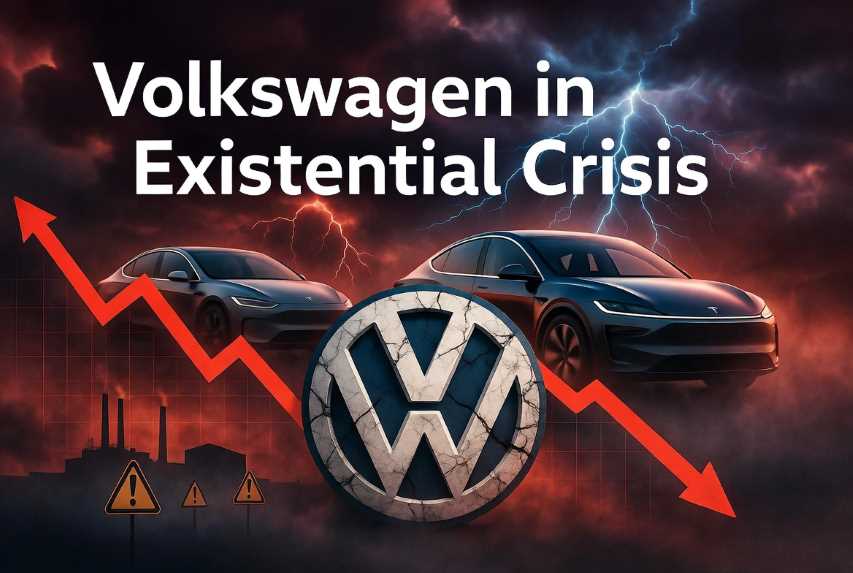
The Volkswagen Group, long regarded as one of the most powerful and resilient empires in the global automotive sector, is now locked in what many analysts describe as an existential struggle for survival. What was once a sprawling industrial colossus — boasting over 667,000 employees worldwide, a portfolio of iconic brands including Volkswagen, Audi, Porsche, Škoda, Cupra, Lamborghini, Bentley, and others, and deep roots in both mass-market mobility and premium luxury — finds itself battered by a perfect storm of plummeting profits, catastrophic loss of market position in its former stronghold of China, punishingly high production costs in its German homeland, aggressive technological and pricing disruption from Chinese electric vehicle upstarts, and the immense capital demands of the shift to electrification and software-defined vehicles.
In mid-2026, the company is confronting the largest restructuring in its 89-year history. Under the leadership of CEO Oliver Blume, Volkswagen is attempting nothing short of a fundamental reinvention: slashing its model lineup by up to half, reducing global production capacity by roughly one million vehicles annually, and confronting the politically explosive prospect of up to 100,000 job cuts on top of 50,000 already planned. These moves come after operating profits nearly halved in 2025, margins collapsed to levels not seen since the depths of the Dieselgate emissions scandal, and share prices sank to their lowest point in 16 years.
This is not merely a cyclical downturn. It is a structural reckoning that threatens the very model of German automotive success that powered post-war economic miracles and turned Volkswagen into a global powerhouse. The empire is fighting back with unprecedented urgency — but the path forward is fraught with internal resistance, external competitive threats, and profound uncertainty about whether the reforms will be deep enough, fast enough, and socially sustainable enough to secure long-term survival in an industry being rewritten by Chinese manufacturers, software giants, and shifting geopolitical winds.
From Post-War Giant to Global Empire: The Rise That Made the Fall So Painful
To understand the depth of Volkswagen’s current crisis, it is essential to appreciate the scale of what the company once represented. Founded in 1937 under the Nazi regime with the ambition of producing an affordable “people’s car,” Volkswagen was reborn after World War II as a symbol of West Germany’s economic miracle. The Beetle became an icon of accessible mobility, and by the 1970s and 1980s the company had expanded aggressively into new markets and segments.
The real transformation into a true global empire occurred with its bold entry into China. In the 1980s and 1990s, Volkswagen became one of the first major Western automakers to establish joint ventures in the People’s Republic, building factories and local partnerships that gave it an early-mover advantage. For decades, China was not just a growth market — it was the profit engine that subsidized innovation and expansion elsewhere. At its peak, Volkswagen commanded massive market share, enjoyed double-digit margins in China, and used those earnings to fund everything from premium brand acquisitions (Audi, Porsche, Bentley, Lamborghini) to ambitious electrification programs.
By the 2010s, the Volkswagen Group had become a behemoth. It routinely sold close to or above 10 million vehicles annually across its brands. It employed hundreds of thousands directly and supported millions more through its vast supplier network. Its headquarters in Wolfsburg, Lower Saxony, functioned almost like a company town, with the state of Lower Saxony holding a significant ownership stake that gave it — and by extension German labor representatives — substantial influence over strategic decisions through the supervisory board.
This success bred complexity. The group maintained a vast array of brands, platforms, powertrains, and regional variants. It operated factories across Europe, the Americas, Asia, and Africa. While this diversification provided resilience during regional downturns, it also created layers of bureaucracy, duplicated engineering efforts, and high fixed costs that became increasingly difficult to sustain when market conditions turned hostile.
The Profit Collapse: How Margins Evaporated and Cash Flow Tightened
The numbers tell a stark story. Between 2021 and 2025, Volkswagen’s operating margins more than halved. In key reporting periods during 2025 and early 2026, operating profit fell by approximately 44 to 54 percent year-over-year in various comparisons, with one notable quarter showing the margin dropping to just 2.8 percent. Net profit in certain periods shrank by nearly 30 percent.
These declines were not the result of a single bad quarter. They reflected deep structural problems. High fixed costs in German factories — among the most expensive in the world due to strong collective bargaining agreements, high wages, generous social benefits, and elevated energy prices — made many volume models unprofitable or only marginally profitable. At the same time, the company continued to invest heavily in the future: new electric platforms, software development through its CARIAD division, battery technology, and next-generation vehicles.
The result was a growing mismatch between investment needs and cash generation. Reports circulated of potential multi-billion-euro gaps between planned capital expenditures and available free cash flow, raising concerns that future model programs could be delayed or scaled back. For a company that once generated reliable profits to fund its transformation, this cash crunch represented a genuine threat to its ability to compete on technology and product cadence.
Shareholders reacted accordingly. Volkswagen’s stock traded at levels not seen since the summer of 2010, reflecting both the immediate earnings deterioration and longer-term doubts about whether the group could execute the necessary turnaround while maintaining its broad brand portfolio and global manufacturing footprint.
The China Catastrophe: Losing the Market That Built the Modern Volkswagen
No single factor has damaged Volkswagen more than its rapid loss of dominance in China. For years, the Chinese market delivered the profits and volume growth that allowed the group to pursue ambitious global strategies. That era has ended with shocking speed.
Volkswagen’s sales in China fell by roughly one-third compared with 2019 levels. In the first half of 2026, the declines accelerated in several quarters, with some periods showing drops exceeding 30 percent year-over-year. Profits generated from Chinese operations, which once contributed double-digit margins, have collapsed by more than 80 percent over the past decade according to multiple analyses.
The reasons are well documented but painful for Volkswagen to confront. Chinese consumers shifted rapidly toward domestically produced electric and plug-in hybrid vehicles that offered superior technology, better software experiences, faster updates, and significantly lower prices. Companies such as BYD, NIO, XPeng, Li Auto, and others moved with remarkable speed, leveraging vertical integration in batteries, motors, and electronics, as well as close relationships with local technology suppliers.
Volkswagen, by contrast, was hampered by legacy decision-making processes, slower software development, and vehicles that often felt like electrified versions of existing combustion-engine platforms rather than ground-up electric experiences. The ID. series, intended to be Volkswagen’s breakthrough EV lineup, suffered from well-publicized software glitches and higher pricing that failed to match Chinese buyer expectations in the volume segments.
Although Volkswagen temporarily reclaimed the number-one sales position in China during early 2026 after Beijing reduced certain EV subsidies (which disproportionately affected some domestic budget EV makers), the underlying competitive erosion continues. The company has already revised its long-term China ambitions downward, targeting roughly 3.2 million annual sales by 2030 rather than the previous goal of up to 4 million. Operating margin expectations for the Chinese business have been cut dramatically.
The China crisis carries extra weight because it is not merely a lost growth opportunity — it is the erosion of the profit center that once funded Volkswagen’s transformation. Without those earnings, the group must generate returns from other regions that are themselves facing headwinds from tariffs, regulation, and softer demand.
The Electric Transition: Ambitious Goals, Painful Execution, and Overcapacity
Volkswagen was among the earliest traditional automakers to commit seriously to electrification. It invested tens of billions of euros in new platforms, gigafactories, and software. Yet the transition has proven far more difficult and expensive than anticipated.
Several factors have compounded the challenge. European EV demand growth slowed in 2024–2026 in certain segments after the initial wave of early adopters, partly due to high prices, charging infrastructure gaps, and the expiration or reduction of incentives in some markets. In the United States, policy shifts including the end of certain EV tax credits and the imposition of tariffs created additional headwinds for European exporters.
Meanwhile, Chinese manufacturers continued to improve their offerings at a blistering pace while keeping costs low. The result for Volkswagen has been overcapacity: factories built or expanded for higher volumes now sit underutilized. The group has acknowledged that it built capacity for approximately 12 million vehicles annually before the pandemic, only to see actual sales settle closer to 9 million in recent periods. This mismatch creates enormous fixed-cost burdens.
The company’s response has included earlier cost-reduction programs that achieved notable factory efficiency gains — in some cases exceeding 20 percent — and the previously announced plan to cut around 50,000 jobs by 2030 through voluntary measures. However, management has concluded that these steps are insufficient in the current environment.
The July 2026 Future Plan: A 12-Point Blueprint for Survival
Following tense deliberations, the Volkswagen Group’s executive board presented a comprehensive “Future Plan” to the supervisory board on July 9, 2026. CEO Oliver Blume framed the initiative as the next phase of transformation, necessary because prior cost programs “are not sufficient in the current economic and geopolitical environment.”
The plan’s most visible elements include:
Model Lineup Reduction: The group intends to gradually cut its total model portfolio by up to 50 percent. With roughly 150 model lines currently offered across all brands, this would mean eliminating or consolidating a large number of variants. The focus will shift to the most attractive and profitable market segments rather than trying to be all things to all customers.
Production Capacity Cut: Global annual production capacity will be reduced to 9 million vehicles, down from the current level of approximately 10 million. This represents a deliberate alignment with realistic demand rather than optimistic growth projections.
Complexity Reduction: Significant streamlining across technology platforms, powertrains, equipment and option packages (with some reports suggesting cuts of up to 75 percent in certain areas), overhead structures, and decision-making hierarchies. The goal is to accelerate development cycles and lower per-vehicle costs without sacrificing core product substance.
Workforce and Plant Adjustments: While the official announcement emphasized previously agreed voluntary reductions targeting around 50,000 positions by 2030 (with a substantial portion in Germany), internal discussions had reportedly considered scaling total job cuts to as high as 100,000 and potentially closing four German assembly plants — Hanover, Zwickau, Emden, and Audi’s Neckarsulm facility. These more aggressive options remain under discussion but face strong opposition.
Blume has stressed the need for “structural, sustainable improvements” in cost structure, plant efficiency, technology development speed, and regional market alignment. The overarching ambition is to position the Volkswagen Group by 2030 as “the most attractive automotive company in the world” — with iconic brands, inspiring products, leading technologies, robust financial performance, and strong capital market appeal.
Labor Resistance, Political Realities, and the German Social Contract
Any discussion of Volkswagen’s restructuring must confront the unique governance and cultural context in which the company operates. Germany’s system of co-determination gives employee representatives significant seats on the supervisory board. The state of Lower Saxony holds a blocking minority stake. Strong unions, particularly IG Metall, have historically negotiated generous agreements and wield considerable influence.
Following the July 9, 2026 announcements, protests erupted in Wolfsburg and other locations. Labor leaders argued that deeper or faster cuts would damage communities that depend on Volkswagen and its suppliers. They have pushed for alternative approaches focused on retraining, shorter work weeks, or other measures that preserve employment while the company adapts.
This resistance is not new. Volkswagen has a long history of difficult but ultimately negotiated restructurings. The difference in 2026 is the scale and urgency. Management argues that without decisive action, the entire enterprise — including the jobs it seeks to protect — could be at greater long-term risk from uncompetitive products and eroding market share. The tension between short-term social protection and long-term competitiveness defines much of the current drama in Wolfsburg.
Broader Industry and Economic Implications
Volkswagen’s crisis is widely viewed as a warning signal for the entire European automotive sector. Other traditional manufacturers — Mercedes-Benz, BMW, Stellantis, Renault, and others — face many of the same pressures: the need to fund electrification while managing declining combustion-engine volumes, competition from Chinese entrants, high European cost bases, and regulatory demands around emissions and safety.
If Volkswagen succeeds in becoming significantly leaner and faster, it could set a precedent that forces competitors to accelerate their own restructuring. If it struggles or if labor and political constraints blunt the reforms, it may signal deeper structural challenges for European industry in competing with more agile Asian rivals.
The impact extends beyond the company itself. Hundreds of thousands of jobs in the supplier network depend on Volkswagen’s production volumes. Entire regions in Germany, Central Europe, and elsewhere have economies heavily tied to the automotive value chain. A major contraction at Volkswagen would send ripple effects through these ecosystems, affecting everything from component makers to logistics providers and local services.
For consumers, the restructuring could eventually mean fewer model choices, more focused product lines, and potentially different pricing dynamics as the company seeks to improve per-vehicle profitability. At the same time, a successful turnaround could deliver more competitive, technologically advanced vehicles in the segments where Volkswagen chooses to compete most aggressively.
Geopolitical and Regulatory Headwinds
The challenges facing Volkswagen are not purely commercial. Geopolitical tensions between the United States, China, and Europe have manifested in tariffs, trade restrictions, and technology controls that directly affect automotive supply chains and market access. US tariffs on certain vehicles and components have already reduced Volkswagen’s American sales and added hundreds of millions — in some estimates billions — in annual costs.
European Union regulations on CO2 emissions, battery passports, right-to-repair rules, and data governance add compliance costs and complexity. While these rules aim to accelerate the green transition and protect consumers, they also raise the bar for traditional manufacturers still carrying legacy cost structures.
China’s industrial policy, massive subsidies for its domestic EV champions in earlier years, and rapid build-out of charging and battery infrastructure have created competitors with structural advantages that are difficult for European incumbents to match quickly.
Scenarios for the Road Ahead
Analysts and industry observers outline several possible trajectories for Volkswagen over the next three to five years.
In an optimistic scenario, the Future Plan delivers meaningful cost reductions and complexity cuts, labor negotiations produce a workable compromise on workforce adjustments, new product launches (particularly in China and Europe) regain customer enthusiasm, and the company stabilizes margins while maintaining strong positions in premium segments through Audi and Porsche. By 2030, a leaner Volkswagen Group could be generating solid returns and competing effectively on technology.
In a more troubled scenario, internal resistance delays or dilutes key elements of the restructuring, Chinese competitors continue gaining share in Europe and other markets, EV demand recovery remains uneven, and cash constraints force further cuts to investment or brand support. In this path, Volkswagen could face prolonged low margins, continued market share erosion, and the need for even more painful measures later.
A middle path — perhaps the most likely — involves partial success: capacity and model reductions proceed, some efficiency gains materialize, but social and political constraints limit the depth of workforce changes. The company survives and adapts but operates as a smaller, more focused player than in its peak years, with a permanently altered relationship between management, labor, and the German political establishment.
An Empire at the Crossroads
The Volkswagen Group of 2026 is a company in transition — not yet defeated, but no longer the dominant force it once was. The empire built on German engineering excellence, Chinese market access, and global brand strength is being forced to reinvent itself under intense pressure.
CEO Oliver Blume and his team have articulated a clear direction: reduce complexity, align capacity with reality, accelerate decision-making, and focus resources where they can generate sustainable returns. The July 2026 Future Plan represents the most ambitious attempt yet to execute on that vision.
Whether these measures prove sufficient will depend on several factors that remain unresolved: the outcome of ongoing labor negotiations, the speed at which new competitive products reach the market, the evolution of EV demand in Europe and North America, and the ability of Chinese rivals to maintain their current pace of innovation and cost leadership.
What is certain is that inaction is no longer viable. The combination of financial pressure, competitive threat, and technological disruption has created a moment of truth for Volkswagen. The company that once defined mass mobility for generations of drivers now finds itself fighting to define its own future.
For the hundreds of thousands of employees, the thousands of suppliers, the communities that depend on Volkswagen facilities, and the millions of customers worldwide, the coming years will determine whether this proud industrial empire successfully reinvents itself for the electric and software-driven era — or whether it continues a slow, painful contraction that would have seemed unimaginable only a decade ago.
The struggle is real. The stakes are enormous. And the world is watching how one of automotive history’s greatest empires responds to its greatest test.
 |  |  |
 |  |  |