Time Told in Light
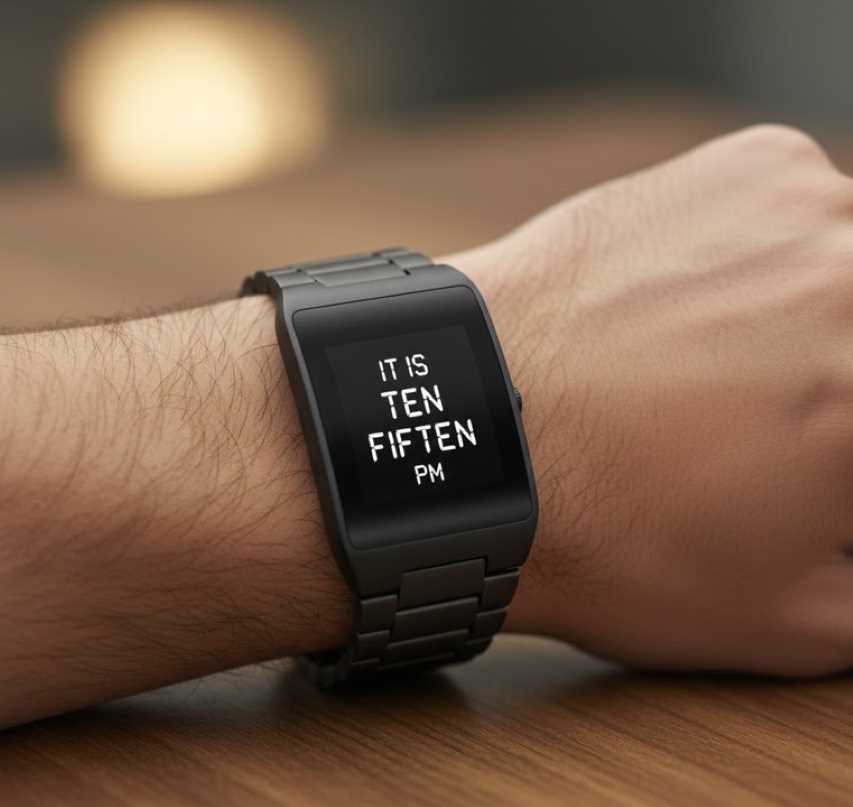
An LED (Light Emitting Diode) Word Digital Watch is a distinct type of electronic timepiece that displays the time in written words or abbreviations (e.g., "TEN FIFTY-TWO") rather than numerical digits ("10:52"). Emerging in the mid-1970s during the peak of the digital watch revolution, it represents a fascinating intersection of technology, minimalist design, and retro futurism. Unlike modern LCD watches, classic LED watches require a button press to illuminate their red, seven-segment displays, creating an iconic, discreet, and interactive way to tell time.
How It Works: The Display & Interaction
The Core Technology:
LED Display: An array of tiny light-emitting diodes (usually red, sometimes other colors) forms a seven-segment display. Different combinations of these segments light up to form alphanumeric characters.
Word Time Format: The watch's microchip is programmed to convert the numerical time data into a pre-set vocabulary of words (like "HALF PAST," "TWENTY," "FIVE," "AM/PM").
Button Activation (Classic Models): To conserve battery power, the display remains off by default. Pressing a side button completes the circuit, powering the LEDs and illuminating the time for 1-2 seconds. This is the signature "on-demand" feature.
Modern Variations: Some contemporary re-issues or hybrid models feature an "always-on" LED display in a low-power mode or use alternative power sources like kinetic or solar charging.
Reading the Time:
Format typically follows: HOUR + MINUTE (e.g., "FOUR TWENTY-SIX").
Some models use shorthand or approximate phrasing (e.g., "FIVE TWENTY-FIVE" instead of "TWENTY-FIVE PAST FIVE").
Key Components & Features
Component | Description |
|---|---|
| LED Display Array | The grid of red (typically) LEDs. Characterized by its sharp, glowing, low-resolution look. |
Case | Often metallic (stainless steel, chrome-plated) with a robust, tech-forward 1970s/80s aesthetic. |
Crystal/Lens | Often a faceted, mineral glass "cockpit" style lens that magnifies and adds depth to the display. |
Control Buttons | Usually 2-4 buttons: one to tell time, others for setting mode, date, light, etc. |
Movement/Module | A specialized digital quartz module programmed for word-time conversion. |
Band | Original models featured metal "bracelet" bands integrated into the case design. Modern versions may use leather or nylon. |
Power Source | A standard silver-oxide button cell battery (e.g., SR626SW). Battery life is excellent due to the passive display. |
The Modern "Word Watch" Evolution
While true vintage LED word watches are collectibles, the concept has evolved:
E-Paper/OLED Word Watches: Modern interpretations using high-resolution screens that show full words in a sleek, always-on format (e.g., "KERB" or "XONIX" brands).
Hybrid Displays: Watches that combine a word-based main display with supplementary digital numeric sub-displays for seconds, date, or metrics.
Primary Benefits & Appeal
Distinctive Retro Aesthetic: Offers a unique, conversation-starting style rooted in 1970s/80s pop culture and sci-fi.
Discreet & Minimalist: The blank face until activated offers a clean, uncluttered look. No glowing screen at night.
Novelty & Intellectual Engagement: Reading time in words is a novel, slightly more cognitive process than glancing at an analog face or digits.
Durability & Simplicity: Lacks complex moving parts (like hands) or delicate full-screen displays. Functionally straightforward.
Collector's Value: Vintage models from brands like Lorenz, Pulso, or Computron are sought-after by tech and watch enthusiasts.
Limitations & Practical Considerations
Legibility: The seven-segment word display can be harder and slower to read at a glance compared to analog hands or large digits, especially in bright light.
Battery Dependency for Activation: The classic "press-to-see" can be inconvenient when your hands are full.
Limited Information Display: Typically shows only time. Advanced functions (chronograph, multiple time zones) are rare and harder to implement in a word format.
Precision: Usually shows time to the nearest minute, not continuously sweeping seconds.
Vintage Maintenance: For original models, finding replacement parts or repair expertise can be challenging.
Buying Guide: What to Look For
Vintage vs. Re-issue/Modern:
Vintage: Check for working condition, screen clarity, case integrity (no corrosion), and original band. Prices vary by rarity and brand.
Modern/Re-issue: Look for updated features (water resistance, improved battery life, better LEDs), build quality, and warranty.
Display Readability: Review photos/videos to ensure you find the word format clear.
Case Size & Fit: Vintage models can be large and heavy by modern standards. Check dimensions.
Brand & Authenticity: For vintage, research reputable sellers. For modern, brands like "ZIIIRO," "Deadwood," or "Eone" offer similar conceptual designs.
Power Source: Confirm battery type and accessibility for replacement.
Step-by-Step: Using a Classic LED Word Watch
To Tell Time: Press the primary button (usually on the right side). The word display will illuminate for 1-2 seconds.
To Set Time: Enter "set mode" via a secondary button. Use the primary button to advance the hours/minutes. The setting sequence varies by model (consult manual).
Battery Conservation: The watch keeps time internally. Only use the light button when necessary to maximize battery life (often 12-24 months).
Care & Maintenance
Battery Replacement: Have it replaced by a jeweler/watch repair shop to ensure proper sealing and avoid damaging the case back.
Cleaning: Wipe the metal case and crystal with a soft, dry cloth. Avoid moisture exposure unless rated water-resistant.
Storage: For vintage pieces, store in a cool, dry place. Remove the battery if storing long-term to prevent potential leakage.
A Niche Statement in Timekeeping
The LED Word Digital Watch is not a tool for the efficiency-obsessed. It is a wearable piece of tech history and a deliberate style choice. It appeals to those who appreciate retro technology, minimalist design, and the charm of a more interactive, less obvious method of telling time. In an era of always-connected smartwatches, it stands as a nostalgic, functional artifact that prioritizes a singular, unique experience over multifunctionality. Owning and wearing one is less about pure timekeeping and more about making a personal statement—a glowing, red reminder of a different technological era.
 |  |  |
 |  |  |