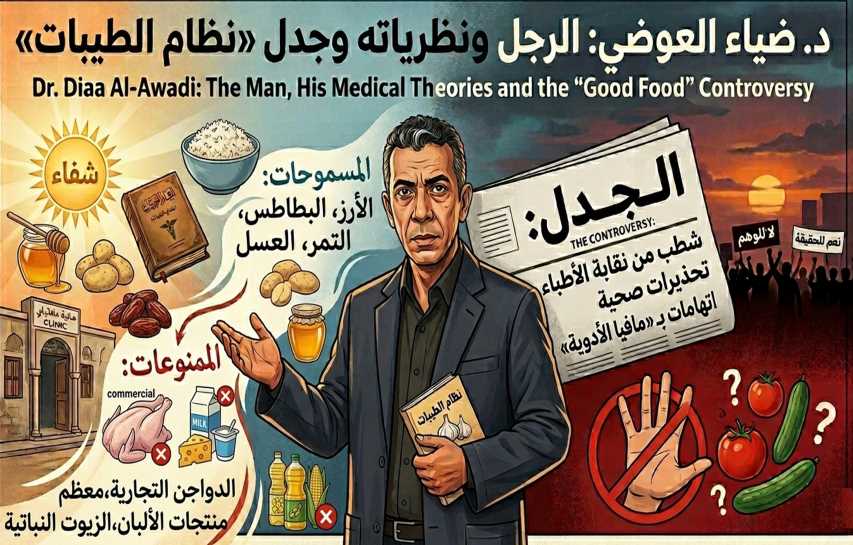
Dr. Diaa al‑Din Shalabi Mohamed al‑Awadi was an Egyptian anesthesiologist and critical‑care consultant who rose to prominence as one of the most divisive figures in Arabic‑language medical discourse. After his unexpected death in Dubai in April 2026 the debate over his unorthodox claims intensified, raising fundamental questions about the line between alternative nutrition and evidence‑based medicine. Below is a detailed account of his life, his core ideas, and the professional backlash they provoked – all presented in a structured, balanced narrative.
A Brief Portrait
Al‑Awadi was born into an academic family in 1979 and graduated with honors from the Faculty of Medicine at Ain Shams University in Cairo. He specialized in anesthesiology, intensive‑care medicine, and pain management, and for many years ran private clinics in Cairo’s Nasr City and Nozha districts. With more than one million followers across Facebook, YouTube and other platforms, he became a social‑media phenomenon, posting short videos in which he combined spiritual language with bold physiological pronouncements. He often referred to himself as a “professor of natural medicine” and a “researcher in therapeutic nutrition,” though he held no formal academic appointment in those fields.
The “Al‑Tayyibat” (Good Food) Dietary System
Al‑Awadi’s most famous creation is “Al‑Tayyibat” (الطيبات), a dietary framework that he described not as a mere weight‑loss plan but as a holistic path to “self‑healing.” The system is built on a stark moral‑physiological dualism:
“Malicious and toxic” foods – foods he claimed cause systemic inflammation and must be eliminated entirely. These include commercial poultry, most dairy products, vegetable oils, white sugar, legumes, many raw vegetables and leafy greens, citrus fruits, soft drinks, and even certain medications such as aspirin and antidepressants.
“Good” foods – foods he considered “healing” because they are easy to digest and produce minimal waste. Permitted items are rice, potatoes, dates, honey, olive oil, ghee, red meat, cooked non‑leafy vegetables, and selected fruits (e.g., apples, mangoes, guava).
Core practical rules include: eat only when genuinely hungry and stop at satiety without counting calories; drink water only when thirsty; observe regular intermittent fasting (especially on Mondays and Thursdays); and avoid mixing fruit types in the same meal.
Al‑Awadi summarized his philosophy in the slogan “Your food is your medicine, and your medicine is in your food” and argued that the root of all chronic disease lies in “repeated wrong inputs” rather than in an inherently flawed body.
The Twenty‑Five Theories
Pro‑Al‑Awadi websites catalogue 25 scientific theories that he presented in his lectures and videos. They are grouped under four main domains:
Digestive System (5 Theories)
# | Theory Name | Core Proposition |
|---|---|---|
1 | Colon‑Sciatica Theory | Irritable bowel syndrome and sciatic pain are two faces of a single “inflamed, blocked colon” phenomenon. |
2 | Full‑Body Manufacturing Theory | The body does not simply “extract” nutrients; it is an integrated factory that manufactures what it needs. |
3 | Stomach‑Headache Theory | Most headaches stem from poor digestion, not from the brain itself. |
4 | Beneficial Bacteria Theory | The gut microbiome is not a collection of “good bugs” but a delicate ecosystem that is easily damaged by processed foods. |
5 | Colon Protocol | A step‑by‑step approach of emptying, calming, and re‑training the colon through dietary restriction. |
Cancer & Chronic Diseases (4 Theories)
# | Theory Name | Core Proposition |
|---|---|---|
6 | Interstitial Fibrosis & Alzheimer’s | Alzheimer’s disease begins as a fibrosis of the interstitial tissue caused by toxins, not simply by neuronal death. |
7 | Oncogenic Interstitial Environment | Cancer does not “appear” suddenly; it is slowly built inside a suffocated, toxic interstitial medium. |
8 | Digestive‑Hormonal Axis | Cancer starts not in the cell but on the plate; the gut‑brain‑hormone axis determines oncogenesis. |
9 | Sugar‑Acetone Emergency System | High blood sugar and acetone are not diseases but the body’s last‑resort rescue mechanism for the brain. |
Hormones & Metabolic Balance (6 Theories)
# | Theory Name (English) | Core Proposition |
|---|---|---|
10 | Frozen Pelvis & Fistula Theory | Pelvic fistulas, adhesions, and chronic inflammation are a single “frozen pelvis” catastrophe, not separate diseases. |
11 | Insulin‑Cortisol Conflict | Insulin and cortisol are natural antagonists; chronic stress forces the gut to release insulin at the worst time, causing energy paralysis. |
12 | Pituitary‑Axis Dysfunction | What is diagnosed as “insulin resistance” is often a central hypothalamic‑pituitary‑adrenal‑thyroid (HPAT) axis breakdown. |
13 | Insulin Paradox | Giving insulin when cortisol is high makes cells starve despite abundant glucose; the body deliberately raises glucose to protect the brain. |
14 | No‑Insulin‑Resistance Theory | HOMA‑IR is a mathematical illusion; high insulin is merely a sign of a clogged gut, not a cellular resistance. |
15 | Myth of Cholesterol | Cholesterol is a vital “biowax” and a building block, not an enemy; the problem lies in inflammation, not in cholesterol itself. |
Mitochondria & Energy (3 Theories)
# | Theory Name (English) | Core Proposition |
|---|---|---|
16 | Mitochondrial Theory | True fat burning can occur only inside the mitochondria; sugar is an emergency fuel, not the body’s primary energy source. |
17 | Lipid Theory | Natural fats are the body’s preferred energy substrate; the low‑fat diet is a historical mistake. |
18 | Obesity‑Satiety Theory | Obesity is not caused by excess calories but by an inefficient mitochondrial energy‑conversion system. |
Important caveat: All 25 theories are taken from a fan‑run memorial site. They appear to be a post‑humous systematization of statements Al‑Awadi made in dozens of hours of video. None of them have been published in peer‑reviewed journals or validated by independent clinical trials.
Professional Backlash and Legal Action
Al‑Awadi’s claims went far beyond dietary advice. In widely circulated videos he declared that smoking is not harmful, that insulin is a “fraud,” and that sugar is not dangerous. He also denounced standard cancer treatments and antidepressants.
The response from the Egyptian medical establishment was swift and severe:
February 2026 – The Egyptian Doctors Syndicate permanently revoked his membership, which under Egyptian law automatically cancels a physician’s license to practice. The syndicate stated that his advice “was not based on scientific evidence” and could “mislead patients and pose risks to public health”.
March 2026 – The Ministry of Health shut down his two Cairo clinics and officially revoked his medical license.
A reported clinical consequence – A seven‑year‑old diabetic child in Dakahlia fell into a coma after his family stopped giving him insulin, reportedly influenced by Al‑Awadi’s “insulin is a fraud” video. The incident sparked a wave of condemnation from Egyptian doctors and prompted an online awareness campaign by the health ministry.
Additional legal conflict – The family of the late Egyptian singer Abdel Halim Hafez also filed a lawsuit after Al‑Awadi published a video in which he harshly criticized the singer’s romantic legacy, claiming it had a “negative impact” on entire generations.
Al‑Awadi also warned that Egyptian chicken, milk, and even sugar contained hidden chemicals (penicillin, growth enhancers) that were behind the rise in childhood obesity, diabetes, and cancer – claims that added to his populist appeal but were dismissed by food‑safety authorities.
Sudden Death and the “Conspiracy” Narrative
On 19 April 2026, Diaa al‑Awadi died in a Dubai hotel at the age of 47. The UAE medical report cited a sudden cardiac arrest, and the Egyptian Ministry of Foreign Affairs confirmed there was “no criminal suspicion”. His body was repatriated to Egypt, where thousands gathered for his funeral at the Al‑Tawheed Mosque in Obour.
Despite the official explanation, speculation exploded on social‑media platforms. Many of his followers insisted that he had been “liquidated” because he had dared to reveal “the truth” about the pharmaceutical industry, the food industry, and corrupt medical institutions. This conspiracy narrative became so widespread that his lawyer had to issue statements acknowledging the medical findings while asking for respect for the family’s privacy.
What Does Science Say?
Shortly after his death, Al Jazeera published a detailed scientific assessment of the “Al‑Tayyibat” system. Key points included:
Elimination vs. moderation – Dr. Robert Shmerling of Harvard Medical School notes that science does not favor wholesale food‑group bans but rather moderation and variety.
Saturated fat risks – The American Heart Association warns that diets high in saturated fats (butter, cream, red meat) can raise LDL cholesterol and increase cardiovascular risk, directly contradicting the unlimited‑fat allowance of Al‑Tayyibat.
Fiber and the microbiome – Eliminating legumes, whole grains, and most vegetables removes the primary fuel for beneficial gut bacteria, potentially harming long‑term intestinal and metabolic health.
Hydration – Relying solely on thirst is risky; by the time thirst appears the body may already be mildly dehydrated.
Lack of clinical evidence – The Egyptian Doctors Syndicate’s investigation found no clinical trials or peer‑reviewed data supporting Al‑Awadi’s claims.
A Polarizing Legacy
Diaa al‑Awadi remains a deeply symbolic figure. To his supporters he was a fearless truth‑teller who exposed the collusion between “Big Pharma,” the food industry, and conventional medicine. To his professional peers he was a dangerously misguided doctor whose charisma and unverified theories led vulnerable patients to abandon life‑saving treatments such as insulin and chemotherapy.
His story is a powerful reminder of the tension that can arise between the legitimate demand for holistic, food‑centered approaches to health and the absolute necessity of evidence‑based medical practice. His death, his banned clinics, and the ongoing controversy surrounding his 25 theories ensure that his name will be debated for years to come – as both a cautionary tale and, for many, an inspiration.
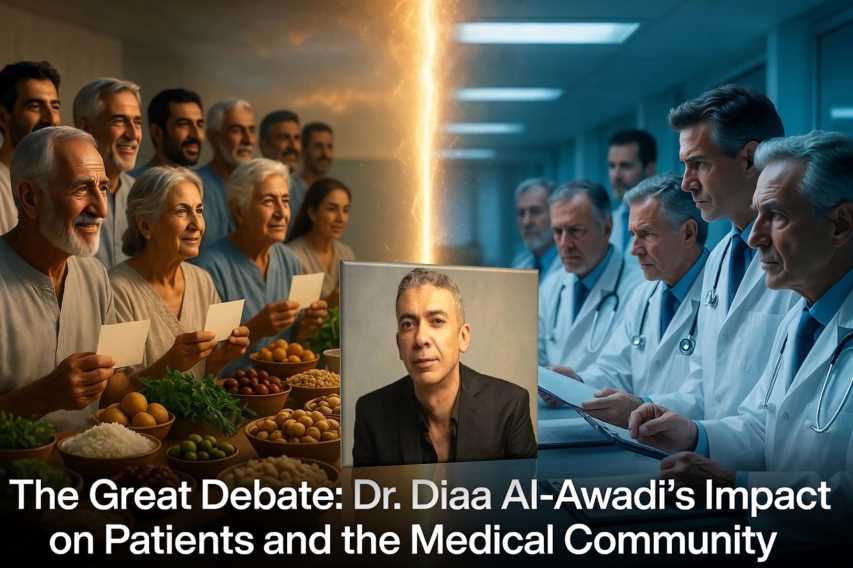
The Great Debate: Dr. Diaa Al-Awadi’s Impact on Patients and the Medical Community
 |  |  |
 |  |  |