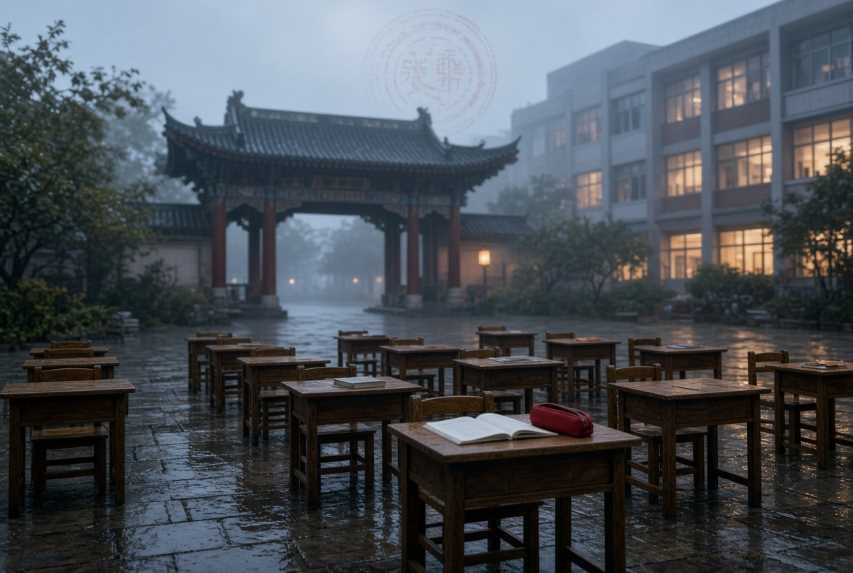
China has not outlawed private schooling. What it has done, over nearly a decade of law and regulation, is draw a hard line around the nine years of compulsory education: primary and junior secondary schooling for children roughly aged 6 to 15 cannot be run as a profit-making business.
That distinction matters. Private kindergartens, senior high schools, vocational colleges, universities, and many non-academic training services may still operate for profit. Nonprofit private schools at the compulsory stage remain legal. After-school academic tutoring in core subjects for the same age group was separately forced into nonprofit form or closed. The combined effect has already reshaped school ownership, family spending, education-technology companies, and the way Beijing wants artificial intelligence used in classrooms.
The policy sits at the intersection of education, capital markets, technology, and social policy. It is one of the clearest recent examples of China treating a sector that grew rapidly under market incentives as a public good that must not be controlled by investors.
What Has China Changed?
The core legal rule
The central statute is the Law of the People’s Republic of China on the Promotion of Privately-run Schools, amended by the Standing Committee of the National People’s Congress on 7 November 2016 and effective from 1 September 2017.
Article 19 of the amended law allows sponsors to choose whether a private school is nonprofit or for-profit — except that they “shall not establish for-profit privately-run schools providing compulsory education.”
In Chinese law, compulsory education covers six years of primary school and three years of junior high school. That is the band the profit ban covers.
What “for-profit” means in this system is specific:
Nonprofit private schools may not distribute surplus to sponsors. Any surplus must be used to run the school. Tuition is more tightly supervised. These schools can receive land, tax, and subsidy treatment closer to that of public schools.
For-profit private schools may distribute surplus under company law after tax and required reserves. Fees are more market-based, but the school must still meet licensing, curriculum, and teacher rules.
At the time the 2016 amendment passed, officials noted that registered private primary and junior high schools were already organized as nonprofits. The law’s immediate effect was to lock that status in and block conversion into profit-distributing companies.
The 2021 tightening
The next major layer was the Implementing Regulations for the same law, issued as State Council Decree No. 741 on 7 April 2021 and effective 1 September 2021. Those rules did more than repeat the profit ban. They restricted how capital can control schools:
Foreign-invested enterprises, and social organizations actually controlled by a foreign party, may not found, participate in founding, or actually control a private school that provides compulsory education.
Public schools that provide compulsory education may not establish, participate in, or convert into private schools.
Other public schools may not establish or participate in for-profit private schools, with a limited exception for vocational education in partnership with enterprises.
No organization or individual may control a compulsory-education private school, or a nonprofit preschool, through mergers, acquisitions, or agreement-based control structures of the kind often used in variable-interest-entity arrangements.
Nonprofit schools face tighter rules on related-party transactions, fee accounts, and disguised profit-taking through management fees.
In May 2021, central authorities also issued guidance aimed at keeping public schools as the main provider of compulsory education. In practice, many provinces stopped approving new private compulsory schools and set informal targets to keep the private share of that stage low.
A related but separate policy: Double Reduction
On 24 July 2021, the Communist Party Central Committee and the State Council issued the “Opinions on Further Reducing the Burden of Homework and Off-campus Training for Students in Compulsory Education,” widely known as Double Reduction (双减).
That policy targeted after-school tutoring, not school licenses themselves. Its main effects were:
For-profit academic tutoring in core school subjects for grades 1–9 was prohibited.
Existing subject-based tutoring institutions were required to register as nonprofits.
Tutoring in core subjects on weekends, public holidays, and school vacations was restricted.
Online and non-subject tutoring faced tighter approval and review.
The school-ownership rules and the tutoring rules are often described together because they hit the same age group and the same investor class. Legally they are different instruments.
What is still permitted
Private education was not abolished. The remaining space includes:
Nonprofit private primary and junior high schools.
For-profit private kindergartens, senior high schools, secondary vocational schools, and higher-education institutions, subject to licensing and, in some cases, foreign-investment limits.
Non-academic “quality education” such as arts, sports, coding, and robotics, under separate training rules.
Adult education, exam preparation for university and civil-service tests, vocational certification, and study-abroad services.
Technology products sold to schools and families, so long as they are not used as a vehicle for banned for-profit K–9 academic tutoring.
International schools serving foreign-passport holders, which sit in a different regulatory channel from private schools that teach the Chinese national curriculum to Chinese citizens.
How large the sector still is
According to the Ministry of Education’s 2025 National Statistical Communiqué on Educational Development, published in July 2026:
China had 137,900 private schools of all types, 31.29 percent of all schools.
They enrolled 43.45 million students, 15.49 percent of all students.
Private compulsory-education schools numbered 9,081, or 5.05 percent of compulsory schools.
Those schools enrolled 10.25 million students, or 3.58 percent of compulsory-stage enrollment, including 4.63 million government-purchased seats.
Private kindergartens: 120,800.
Private regular senior high schools: 5,003.
Private secondary vocational schools: 2,076.
Private higher-education institutions: 831.
The private-school count fell by 14,900 in a single year and by more than 50,000 over six years. Compulsory private schooling is now a small slice of the system by enrollment. Preschool and senior high school remain much more privately supplied.
Policy timeline
Date | Measure | Effect |
Dec 2015 / Jun 2016 | Education Law amended | Removed the old blanket ban on running schools for profit |
7 Nov 2016 / 1 Sep 2017 | Private Education Promotion Law amended | For-profit schools banned from compulsory education |
31 Dec 2016 | Rules on supervision of for-profit private schools | Confirmed for-profit operations allowed outside compulsory education |
May 2021 | Central guidance on compulsory private schools | Generally, no new private compulsory schools; public schools to remain the main provider |
7 Apr 2021 / 1 Sep 2021 | Implementing Regulations revised | Ban on foreign control, VIE-style control, public-school spin-offs; tighter finance rules |
24 Jul 2021 | Double Reduction | For-profit core-subject tutoring for grades 1–9 prohibited |
2022–2023 | Local conversion campaigns | Some cities bought seats or converted private schools to public |
2024–2025 | Education Powerhouse Outline (2024–2035) | “Guide and regulate” private education; keep academic tutoring tightly controlled |
Apr 2026 | “AI + Education” Action Plan | Push AI into public teaching, management, and lifelong learning |
Jun 2026 | Education development plan for the 15th Five-Year Plan period | Continue regulating private education and off-campus training |
Jan 2026 | Large Beijing fine for unlicensed tutoring | Signal that the tutoring ban has not been repealed |
Jul 2026 | 2025 education statistics released | Private compulsory schools at about 5 percent of school count |
Why Is China Making This Change?
Officially stated reasons
Chinese officials have been consistent about the public-welfare framing. When the 2016 amendment passed, a senior legislative official said profit-led private schools were “unsuitable for the free education program.” Later regulations repeat that private education must “uphold the public-welfare nature of education.”
The publicly stated objectives include:
Keep compulsory education a public good. Nine-year schooling is legally compulsory and intended to be free or low-cost in the public system. Allowing investors to extract profit from that stage was judged incompatible with that design.
Reduce family financial pressure. Rapid growth of elite private schools and after-school tutoring raised household education costs and intensified competition for scarce “good school” places.
Limit excessive academic competition. Officials argued that a commercial tutoring and private-school market was turning childhood into an arms race and contributing to anxiety among parents.
Prevent capital from controlling a strategic sector. The 2021 rules explicitly target disguised profits, related-party transactions, chain control of many schools, and agreement-based control structures.
Protect curriculum and political oversight. Private schools must follow Party leadership, national curriculum requirements, and restrictions on foreign textbooks and control in compulsory education.
Rebalance public and private provision. Guidance after 2021 treated public schools as the main channel for compulsory education and discouraged further private expansion at that stage.
Demographic pressure sits in the background. Falling births have already reduced the number of young children. That makes it easier, politically and fiscally, to absorb some private enrollment into public schools and harder for private operators to fill classrooms.
How analysts interpret the same moves
Outside official statements, researchers and market analysts typically add several interpretations:
The state is recentralizing control over human-capital formation after two decades of market-led expansion.
The crackdown was also a response to listed education companies and offshore financing structures that made K–12 education look like a growth-stock sector.
Equity language and fertility concerns overlap: high education costs are frequently cited in Chinese policy discussions as one reason urban families delay or limit childbearing.
The policy is part of a broader pattern of tighter regulation in sectors treated as socially sensitive, including tutoring, online platforms, data, and after-school services for minors.
Those readings are inferences. The legal texts themselves emphasize public welfare, classification of schools, financial supervision, and limits on control — not a campaign to erase private education.
Technology and EdTech
The school-ownership ban and the tutoring ban hit technology companies in different ways.
Operating a private primary school is a licensed education activity. Selling software, tablets, question banks, or classroom systems is a product business. Chinese policy has squeezed the first much harder than the second, then redirected the second toward public schools and non-academic uses.
What broke in 2021
Before Double Reduction, China’s K–12 academic tutoring market was one of the world’s largest education-technology sectors. Online live classes, adaptive homework platforms, and aggressive consumer advertising produced rapid revenue growth and very high valuations. After July 2021:
For-profit core-subject tutoring for compulsory-education students became illegal as a business model.
Foreign capital was pushed out of that activity.
Weekend and vacation classes, the most profitable slots, were restricted.
Major listed firms shut or converted K–9 academic divisions.
Industry estimates later put the contraction of offline academic training institutions at more than 90 percent in the first year.
Market value losses ran into the tens of billions of dollars. Headcount in tutoring collapsed. The consumer-internet model of “acquire a child user, sell more classes” was no longer available in the core subjects.
How companies rebuilt
By 2025–2026, surviving firms had clustered around a smaller set of lawful businesses:
Learning hardware, especially AI-enabled tablets and study devices.
Non-academic courses in arts, sports, science, and coding.
Teaching materials, publishing, and teacher-training products.
B2B or government-facing systems for public schools: homework platforms, classroom analytics, and “smart campus” software.
Adult and higher-education services: postgraduate exam prep, professional certification, study abroad.
Overseas brands that take Chinese teaching methods into other markets.
Livestream commerce and consumer businesses that reuse an education brand’s traffic, a path associated especially with New Oriental.
Financial recovery has been uneven. Some listed education companies have restored revenue and returned to profit. Their market values remain far below the 2020–2021 peaks, which tells investors that the old high-growth tutoring model is not coming back.
Enforcement has not been repealed. In January 2026, Beijing’s market regulator fined an unlicensed education firm 67.28 million yuan for providing academic courses to primary and secondary students between 2023 and 2025. The case was widely read as a warning against rumors that the tutoring ban would be quietly lifted to stimulate the economy.
Digital classrooms and public infrastructure
While consumer tutoring was constrained, the state expanded its own digital education stack: national and provincial smart-education platforms, synchronized classrooms, school management systems, and standardized data interfaces. That shift changes who the customer is. A company that once sold classes to parents now more often sells tools to education bureaus and public schools.
The business implications are significant:
Sales cycles become longer and more political.
Prices are lower than consumer tutoring.
Content must align with the national curriculum and burden-reduction rules.
Data about children is treated as sensitive and increasingly required to stay inside regulated education systems.
Data collection involving children
China’s Personal Information Protection Law treats personal information of children under 14 as sensitive personal information. Processing it generally requires a specific purpose, separate consent, and guardian consent, plus dedicated handling rules. Sector rules add more detail. In 2025 the Ministry of Education issued industry standards on personal-information protection for smart-education platforms. In 2026, education data was again listed among priorities in personal-information protection campaigns, including cases of tutoring institutions collecting or transferring student data without proper consent.
For technology firms, that means student learning traces, location data, biometrics, and household contacts are not a free raw material for advertising or product iteration. The legal and political risk of treating children’s school data as a commercial asset is now high.
Artificial Intelligence and the Future of Education
AI is not banned from Chinese classrooms. The opposite is happening in the public system. What is constrained is AI used as a commercial substitute for school or as an exam-cramming engine sold to children.
The official direction
The Outline of the Plan for Building China into an Education Powerhouse (2024–2035) calls for artificial intelligence to help transform education. In April 2026, the Ministry of Education and other departments issued an “AI + Education” Action Plan. Provincial and city plans followed. Examples include:
Henan targeting staged coverage of AI education in primary and secondary schools, with a goal of province-wide popularization by 2030.
Beijing requiring AI general education in primary and secondary schools and publishing application guidelines that sort uses into prohibited, limited, and encouraged lists.
Qingdao and other cities deploying smart classrooms, AI labs, teaching assistants, and planning models that forecast enrollment and school-place demand.
Typical approved uses are teacher lesson-planning support, automated marking of objective work, learning analytics, school-management alerts, and introductory AI literacy for students. Typical warnings are equally clear: do not turn AI into a homework-completion service, do not use it to intensify exam drilling, and do not let students become dependent on generated answers.
What this means for AI products
Application | Likely path under current policy |
AI tutor sold as paid K–9 academic coaching | High legal risk if it functions as banned subject tutoring |
Teacher-assistance tools inside public schools | Encouraged, usually through government procurement |
Adaptive practice aligned to school curriculum | Possible as a school-side tool; constrained as a parent-paid cram product |
Automated grading and exam analytics | Growing in public systems, with fairness and burden rules |
Educational chatbots and content generation | Allowed with age-based limits; open-ended generation often restricted for younger pupils |
Learning tablets and on-device models | A major commercial outlet after tutoring was restricted |
Classroom robotics and smart hardware | Supported where framed as science education or school infrastructure |
Child-data-driven personalization | Allowed only under guardian-consent and education-platform rules |
Regulation can slow some forms of consumer innovation and speed others. The consumer “AI tutor for every child” model that venture investors favored before 2021 is a poor fit for compulsory-education rules. The public-sector model — AI as infrastructure inside state schools — is the path Beijing is funding.
Whether that produces better learning is still an open empirical question. Official documents present AI as a way to personalize teaching and reduce teacher workload. The same documents worry about shallow thinking, extra homework in digital form, and unsafe use of minors’ data. Both concerns can be true at once.
Economic Impact
Private-school operators and investors
Operators of compulsory-stage private schools lost the option to convert into dividend-paying companies. They also lost easy access to offshore listing structures that depended on contractual control. Existing schools could remain nonprofit, accept tighter fee and related-party rules, sell or transfer assets to local governments, or wind down.
Investors who underwrote school chains on the assumption of rising tuition and eventual public listings faced write-downs. Real-estate developers that used a private-school brand to sell nearby housing lost a familiar amenity story. Local governments, by contrast, sometimes acquired campuses or student places at negotiated prices, converting private capacity into public or “government-purchased” seats.
Education and technology companies
The sharpest listed-market shock came from tutoring, not from school campuses. Firms that depended on K–9 academic classes saw revenue collapse in 2021–2022, then spent several years rebuilding around hardware, adult education, and school-side technology. Venture capital that once treated Chinese K–12 EdTech as a default growth bet moved to other sectors or to overseas education products.
By 2026, some large firms were again profitable. That recovery should not be confused with a restoration of the old industry. The lawful market is smaller, more regulated, and more dependent on public-school procurement and hardware margins.
Teachers and education workers
The tutoring crackdown displaced a large number of teachers, counselors, and sales staff. Some moved into public schools, quality-education centers, adult training, or other industries. Private compulsory schools that converted to public status often kept teachers but changed pay, contract, and admission rules. Nonprofit conversion can stabilize a school’s legal status while reducing the sponsor’s ability to fund expansion from distributed profits.
Parents and household spending
The intended economic effect on families was lower spending on tuition and tutoring. Research on Double Reduction finds a more complicated picture. Institutional group classes shrank, but some demand moved into one-to-one tutoring, informal arrangements, and non-academic classes. One 2026 academic study using household survey data found that tutoring enrollment and household tutoring expenditure did not fall uniformly and in some settings rose through individualized services, while average measured academic performance did not clearly improve.
That does not prove the policy failed. It does show that demand for extra instruction is sticky in a system still organized around high-stakes senior-high and university entrance exams.
Real estate, advertising, and the wider private sector
Private schools had been amenities in many new urban districts. Conversions and enrollment caps weaken that link. Education advertising aimed at children in core subjects was sharply restricted. The broader signal to private capital was that sectors involving minors, social anxiety, and public services can be reclassified quickly from “growth industry” to “public-welfare activity.”
Short-term effects were contraction, job losses, and lower asset values. Longer-term effects include a smaller private compulsory-school sector, a redirected EdTech industry, and more state spending and procurement in digital public education. Those fiscal costs are real, even if they do not appear on a company’s income statement.
Impact on Families and Children
School choice and cost
Families in large cities previously used private compulsory schools for smaller classes, bilingual programs, different management cultures, or as a way around catchment-area limits. Those options have narrowed. Remaining private schools at that stage must be nonprofit, face synchronized admission with public schools in many places, and often use lotteries when applications exceed places.
Tuition at converted or tightly regulated schools can fall, especially where government purchases the seat. Families that wanted a distinctive private program may find fewer legal options inside China for grades 1–9. High-income households can still look to international pathways, senior-high private schools, overseas study, or high-cost informal tutoring. Lower-income urban and rural households were never the core customers of elite private schools; their gains, if any, depend on whether public schools improve and whether hidden tutoring costs stay down.
Urban and rural differences
In cities with many migrant workers, private schools sometimes absorbed children who could not easily enter local public schools because of household-registration rules. Converting those schools to public status can improve fee levels if the government funds the places. It can also create transition problems if capacity, transport, or eligibility rules are not handled carefully.
Rural areas generally had fewer elite private chains. Their main issues are school consolidation, teacher supply, and digital access — problems the profit ban does not solve by itself.
Competition and expectations
Officials hoped to cool the education arms race. Exam structures still reward extra preparation. As long as senior-high and university entrance remain highly competitive, many parents will look for any remaining legal or informal advantage. The policy can change the form of competition more reliably than it can abolish the incentive for competition.
Teachers and employment inside schools
For children, the visible change is the school on the gate: public, converted, or remaining nonprofit private. For teachers, the change can include new employers, different bonus systems, and less privately funded enrichment programming. Quality outcomes will vary by locality. National statistics show high compulsory-education consolidation rates, but those figures measure completion more than classroom quality.
Impact on China’s Education Industry
Private education companies have responded in several documented ways:
Stay nonprofit at the compulsory stage and accept limits on profit extraction and expansion.
Convert or sell campuses to local governments.
Shift investment to senior high school, vocational education, and higher education, where for-profit operation remains legal.
Leave school operation and sell technology, hardware, or content instead.
Move into adult education and overseas markets.
Merge, close, or restructure brands that cannot cover costs without the old tuition and tutoring cash flow.
Classification management — the legal split between nonprofit and for-profit schools — is still incomplete in parts of higher education. Reporting in 2026 noted that only a small minority of private colleges had finished for-profit company registration, while many older institutions remained in a holding pattern. Compulsory education is clearer because the for-profit option was removed.
Valuations of education companies now price in regulatory ceilings. That is a durable industry condition, not a one-year shock.
International Comparison
Countries regulate private schooling very differently. Direct copies of China’s model are rare because the legal meaning of “private,” “compulsory,” and “for-profit” is not the same everywhere.
United States. Independent private schools may operate as nonprofits or, less often, as for-profit firms. They charge tuition and receive limited public operating funds. Charter schools are publicly funded and tuition-free; they are generally organized as nonprofits even when management companies are involved. For-profit K–12 chains exist but are politically contested and far from the center of the system. About 8 percent of students were in private schools in recent OECD figures, with a separate charter sector.
United Kingdom. Most independent schools are fee-charging and not state-funded. Academies and free schools are state-funded, tuition-free, and run by nonprofit trusts. For-profit operation of state-funded schools is not the English model.
Sweden. “Free schools” may be run by companies, including for-profit groups, but they cannot charge tuition and receive public per-student funding. That is almost the inverse of China’s compulsory-stage rule: profit is allowed, fees are not.
Netherlands. A large share of schools are privately managed but publicly funded and not run for profit. They follow national rules on curriculum and teachers.
Many other systems. Australia, Canada, France, and parts of Europe fund some non-state schools while requiring nonprofit status, national curriculum alignment, or both.
China’s distinctive combination is this: private management of compulsory schools is still allowed, fees may exist in remaining private schools, but profit distribution at that stage is forbidden, foreign control is barred, and public schools are required to remain the main provider. Few large economies have applied that package so comprehensively to the entire primary-and-junior-secondary band.
Tutoring regulation also differs. Some countries limit advertising, tax treatment, or school-day hours. China’s 2021 prohibition on for-profit core-subject tutoring for compulsory-education students was unusually sweeping.
Broader Social and Geopolitical Implications
The policy says less about diplomacy than about how China now classifies domestic industries.
Education for children is treated as a sector in which market entry, ownership, data, and curriculum are matters of public authority. Technology companies may supply tools, but they are not supposed to own the compulsory-school relationship with families. Children’s data is regulated both as personal information and as education-system data. Human-capital policy is being steered toward public schools, vocational pathways, and state-directed digital platforms rather than toward a listed tutoring industry.
International schools and Chinese-foreign cooperative programs continue under separate rules, with foreign investment still restricted or prohibited in compulsory-education institutions. That affects expatriate families and some bilingual programs more than it affects the average public-school student.
These are documented features of the legal regime. They do not, by themselves, determine how Chinese students will compare internationally in future assessments, or how private capital will behave in other industries.
Winners, Losers, and New Opportunities
It is more accurate to talk about constraints and openings than about permanent winners.
Facing tighter limits
For-profit operators and investors in grades 1–9 school chains.
Academic tutoring companies aimed at compulsory-education students.
Offshore control structures used to list China K–12 assets.
Advertising businesses built on parental anxiety in core subjects.
Real-estate projects that depended on a private-school premium.
Facing weaker or more complicated demand
Elite private compulsory schools that can no longer select students as freely.
Informal markets that absorb unmet demand at higher unit prices.
Teachers whose pay depended on after-school class volume.
Finding new room
Public-school digital platforms and suppliers of classroom AI, devices, and management software.
Hardware makers of learning tablets and smart-campus equipment.
Nonprofit private schools that can survive on regulated fees and possible subsidies.
Vocational education, adult training, professional exams, and study-abroad services.
Quality-education providers in arts, sports, and science, if they stay clear of disguised academic tutoring.
Companies that export teaching products outside mainland China.
Evidence for these shifts is already visible in official school counts, listed-company segment reporting, procurement of smart classrooms, and continued penalties for unlicensed academic tutoring.
What Happens Next?
Documented direction
Several trends are already in motion:
Private compulsory education is small and closely supervised. The 2025 figures put it near the 5 percent school-count level that some provinces targeted after 2021.
Classification and exit rules continue to be refined. Guangdong, for example, issued procedures on major changes and withdrawals of private schools effective 1 September 2026.
Off-campus academic training remains restricted. The January 2026 Beijing penalty is evidence of continued enforcement, not of a formal rollback.
Public digital education and AI adoption are expanding under national and local plans through 2030 and the 2024–2035 education-powerhouse horizon.
Student and teacher data standards are becoming more detailed, which will shape product design as much as education law does.
Possible scenarios, not forecasts
Further regulation could reach remaining gray areas: one-to-one tutors, AI apps that look like classes, and quality-education providers that drift back into exam coaching. Private-school ownership could keep shifting toward government-purchased places and conversions where local budgets allow. Investment may keep consolidating around a few compliant hardware and school-technology firms.
A full return to the pre-2021 consumer tutoring market would require a policy reversal that authorities have not announced. An economic slowdown can create political pressure to tolerate more private activity, but recent enforcement cuts against the idea that the core ban has already been abandoned.
Outcomes for learning quality, fertility, and household stress will depend on public-school capacity, exam reform, and whether informal paid help stays expensive. Those results are not settled by the text of the 2016 law.
Key Takeaways
Education. China banned for-profit private schools in the nine-year compulsory stage, effective 2017, and tightened control in 2021. It did not ban private schools as such. Remaining compulsory private schools are nonprofit and now a small share of enrollment.
Technology. Consumer EdTech built on paid K–9 academic classes was forced to shrink or pivot. School-side software, devices, and public platforms became the safer market.
AI. Policy encourages AI inside public education and teacher tools, while discouraging AI products that recreate paid exam tutoring or harvest children’s data for commercial profiling.
Families. Formal tutoring and some private-school options contracted. Demand for extra instruction did not disappear. Gains in cost and stress are uneven and still debated in research.
Private companies. Operators lost the profit-and-list model in compulsory schooling. Some rebuilt in hardware, adult education, vocational training, and overseas markets.
Investment. The sector is investable mainly where the law still allows fees and profit — senior secondary, vocational, higher education, devices, and public procurement — not where it treats schooling as a non-distributable public service.
The economy. The short-term effect was a sharp write-down of an education-services industry. The long-term effect is a larger state role in basic education and a smaller, more regulated private role around it.
The phrase “China bans profit-making private schools for children” is therefore true only inside a defined boundary: compulsory education, profit distribution, and investor control. Outside that boundary, private and technological education activity continues — under closer watch, with different customers, and with far less room to treat childhood schooling as a growth business.
 |  |  |
 |  |  |