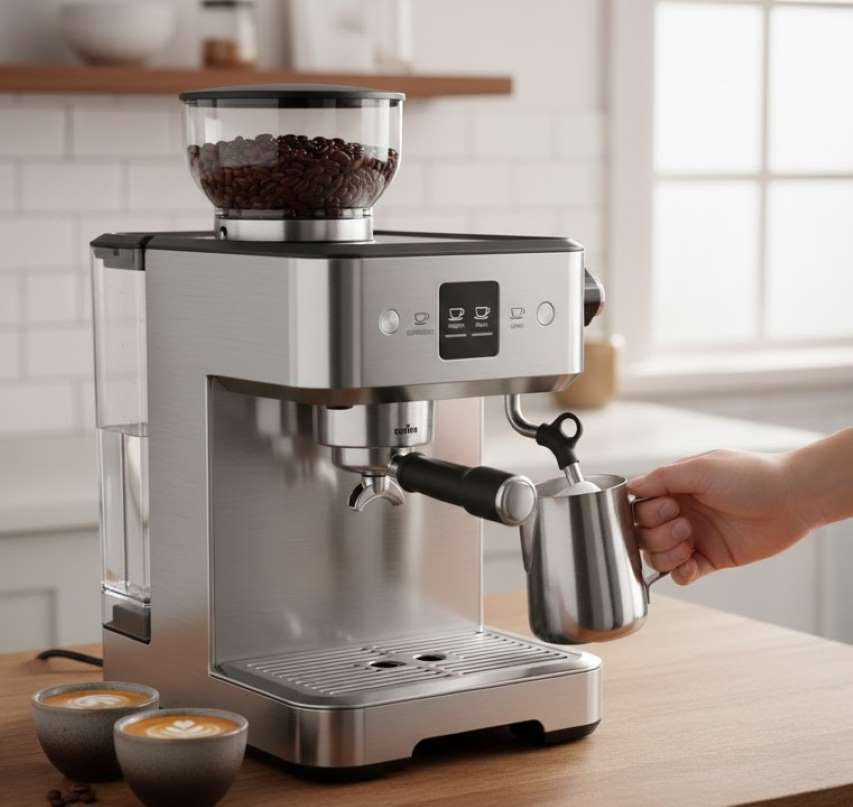
The Home Barista Station
An Espresso Machine with An Integrated Milk Frother and Grinder represents the ultimate all-in-one solution for home coffee enthusiasts. This "trifecta" appliance consolidates the three most critical elements of espresso preparation—fresh grinding, precise brewing, and milk texturing—into a single countertop unit. It bridges the gap between basic pod machines and a collection of expensive, separate components, offering convenience without completely sacrificing the craft of making a true café-quality beverage.
The Three Core Components Explained
The Integrated Grinder
Function: Freshly grinds whole coffee beans on demand, which is non-negotiable for quality espresso.
Type: Typically, a conical or flat burr grinder. Burr grinders are preferred over blade grinders for their consistency.
Key Features:
Dose Control: Measures a precise amount of beans for each shot.
Grind Size Adjustability: A dial to fine-tune coarseness, crucial for dialing in espresso.
Hopper Capacity: Usually holds 200-400g of whole beans.
The Espresso Machine
Function: Forces hot water (90-96°C / 194-205°F) at high pressure (ideally 9 bars) through finely-ground, tamped coffee.
Type: Most combo machines use a thermoblock or single/small dual boiler system for heating.
Key Features:
Pump Pressure: 15 bars max is common, with a valve regulating to optimal 9 bars at the group head.
Programmability: For shot volume, temperature, and pre-infusion.
Group Head: The portafilter locks in here. A 58mm commercial standard is ideal.
The Milk Frother
Function: Steams and aerates milk to create microfoam for lattes and cappuccinos.
Type:
Traditional Steam Wand: A manual, high-pressure steam pipe. Requires skill but offers full control for professional-quality microfoam.
Automatic / Pannarello Wand: A simpler, often one-touch device that creates a consistent, frothier foam with less skill.
Fully Automatic Carafe System: A separate jug that automatically heats and froths milk at the push of a button.
Step-by-Step: The All-In-One Workflow
Fill & Preheat: Fill water tank and bean hopper. Turn machine on to heat up (5-15 mins).
Grind & Dose: Place portafilter in grinding cradle. Machine doses and grinds directly into it.
Tamp: Manually compress the grounds evenly with a tamper (often included).
Brew: Lock portafilter into group head. Press a button for a single/double pre-programmed shot.
Steam: Purge steam wand, then submerge tip in milk jug. Open steam valve to texture milk.
Combine & Clean: Pour milk over espresso. Immediately purge and wipe steam wand; rinse portafilter.
Types of All-In-One Machines
Type | Description | Pros | Cons |
|---|---|---|---|
| Super-Automatic | Does everything: grinds, tamps, brews, and froths milk automatically. | Maximum convenience, push-button operation. | Least control, higher cost, complex maintenance. |
| Automatic with Integrated Grinder (The Focus Here) | Grinds and brews automatically; requires manual tamping and milk frothing. | Great balance of control and convenience. | Steam wand requires learning curve. |
| Semi-Automatic with Grinder Combo | Requires manual start/stop of shot; includes grinder and steam wand. | Maximum control over every variable. | Steepest learning curve. |
Key Features & Specifications
| Category | Feature | Why It Matters |
|---|---|---|
| Grinder | Burr Type | Conical burrs are quieter and generate less heat; flat burrs are preferred for ultimate precision. |
| Grind Settings | Numerous micro-settings allow for precise "dialing in" to perfect extraction. | |
| Brewing | PID Temperature Control | Digitally maintains exact water temperature for consistent flavor extraction. |
| Pre-Infusion | Gently wets coffee grounds before full pressure, promoting even extraction. | |
| Pressure Gauge | Visual feedback on pump/brew pressure helps with diagnosis and consistency. | |
| Milk Frothing | Steam Wand Power | Higher power (thermoblock/boiler dedicated to steam) enables faster, drier steam for better texture. |
| Wand Articulation | A ball-joint wand offers greater maneuverability for positioning the milk jug. | |
| Usability | Programmable Shot Buttons | Allows saving your preferred single/double shot volumes. |
| Cup Warmer | Heats cups on top of the machine for optimal serving temperature. | |
| Water Tank Size | Larger tanks (1.5L+) reduce refill frequency, especially when making multiple drinks. |
Primary Advantages & Benefits
Unmatched Freshness: From bean to cup in under a minute, ensuring peak aroma and flavor.
Space Efficiency: One appliance replaces three (grinder, machine, separate frother).
Workflow Convenience: Seamless, streamlined process with minimal cleanup between stages.
Cost Effectiveness: Often less expensive than buying three high-quality separate components.
Consistency: Automated grinding and dosing reduce variables, making repeatable results easier.
Learning Platform: An excellent way to learn espresso fundamentals without sourcing separate gear.
Limitations & Considerations
Compromise on Each Component: While convenient, each part (grinder, brewer) may not match the peak performance of a high-end standalone unit.
Single Point of Failure: If one component breaks, the entire system may be unusable.
Grinder Limitations: Integrated grinders can sometimes struggle with very light or very dark roasts and may retain more old grounds.
Learning Curve for Steaming: The steam wand still requires practice to master.
Maintenance Complexity: More parts (internal grinder, dual pathways) require diligent cleaning and descaling.
Care, Maintenance & Longevity
Daily: Rinse portafilter and basket, wipe group head gasket, purge and wipe steam wand, empty drip tray and grounds container.
Weekly: Backflush with water (if machine has a 3-way solenoid valve). Clean steam wand tip. Remove and clean grinder burrs (if accessible).
Monthly: Deep clean portafilter and baskets with espresso machine cleaner. Descale according to water hardness—this is critical for machine health.
Longevity: With rigorous maintenance (especially descaling), a quality machine can last 5-10+ years.
Buyer's Guide: How to Choose the Right Machine
Define Your Needs: Are you mainly making straight espresso, or mostly milk drinks? How many drinks back-to-back?
Grind Quality is Paramount: Research the specific integrated grinder. It is the most important component for flavor.
Steam Wand Preference: Decide between a manual wand (for learning and quality) or an automatic system (for simplicity).
Check Programmability: Ensure it has volumetric or manual shot control and adjustable temperature if you're detail-oriented.
Consider the Boiler/Thermoblock: A dual thermoblock or heat exchange system allows simultaneous brewing and steaming.
Measure Your Space: Ensure it fits your available counter space and under-cup clearance.
Read Reviews for Reliability: Look for consistent feedback on build quality, customer service, and long-term durability.
Budget for Accessories: Factor in a good tamper, scale, milk jug, and cleaning/descaling kits.
Popular Models & Brands
Breville (Sage in EU): Barista Express, Barista Pro, Barista Touch. Market leaders known for features and value.
Gaggia: Accademia, Brera. Italian heritage with super-automatic expertise.
De'Longhi: Magnifica, Dinamica, PrimaDonna series. Strong in automatic and super-automatic combos.
Rancilio: Silvia Pro X + Grinder combo. A more commercial-grade, separate-but-sold-together option.
The Centerpiece of a Modern Home Cafe
An Espresso Machine with An Integrated Grinder and Milk Frother is the definitive choice for those who seek the authentic espresso experience without the complexity and clutter of a multi-component setup. It empowers you to craft genuinely excellent cappuccinos, lattes, and straight shots, transforming a daily ritual into a moment of craft and enjoyment. By prioritizing a quality grinder and a capable steam wand in your selection, you invest not just in an appliance, but in a gateway to the rich, rewarding world of home espresso. Remember, the ultimate machine is the one you'll use and enjoy every day.
 |  |  |
 |  |  |