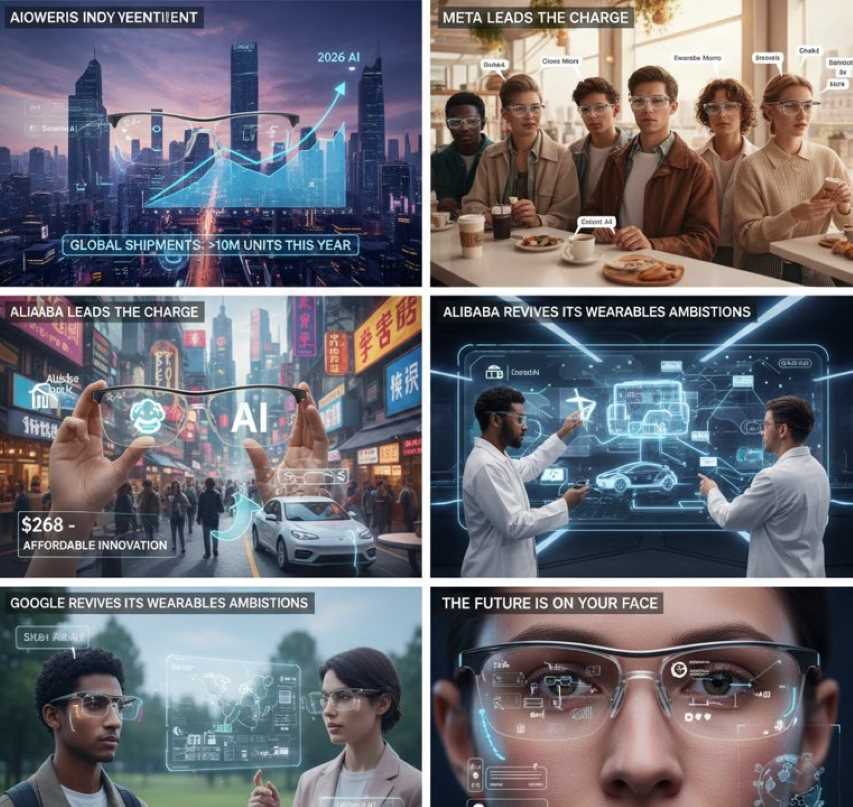
In a rapidly evolving technological landscape, major corporations are channeling billions of dollars into the development of smart glasses equipped with sophisticated Artificial Intelligence (AI) features. These devices are being strategically positioned as the potential successor to the smartphone.
From real-time language translation and object recognition to seamless integration with virtual assistants, these new-generation devices promise to blend Augmented Reality (AR) with everyday eyewear. With industry shipments projected to exceed 10 million units this year alone, leaders such as Meta Platforms, Inc., Alibaba Group, Google, and others are in a fervent race to capture a market that is exploding with innovation and consumer interest.
This massive surge in investment reflects a broader industry shift toward wearable AI, where smart glasses could become the indispensable "killer application" for hands-free computing, fundamentally transforming how users interact with the world around them.
🚀 Meta Leads the Charge with Fashion-Forward Collaborations
Meta Platforms, Inc. has firmly established itself as a frontrunner in the AI smart glasses arena, leveraging its core expertise in social media and Augmented Reality to forge high-profile collaborations.
Ray-Ban Meta Smart Glasses: Developed in partnership with the eyewear giant EssilorLuxottica, these glasses have seen explosive growth, with revenues more than tripling year-over-year in the first half of 2025. They integrate Meta AI for powerful features including voice commands, real-time translation, and environmental awareness via built-in cameras and speakers.
Strategic Investment: Underscoring its commitment, Meta invested approximately $3.5 billion in EssilorLuxottica, acquiring a three percent stake with the potential to increase to five percent. Investor confidence is high, with EssilorLuxottica's shares hitting an all-time high following strong third-quarter sales driven by the AI glasses boom.
Premium Partnerships: To broaden its appeal to style-conscious consumers, Meta has also teamed up with premium brands like Oakley and Prada.
The Oakley Meta HSTN glasses, priced at $399, offer three thousand-pixel video recording, an eight-hour battery life, open-ear speakers, and integrated Meta AI for performance-oriented users. A limited-edition version launched in July for $499.
The Oakley Meta Vanguard series represents the next evolution, emphasizing durability and advanced AI integration for athletes and adventurers.
These collaborations have been highly effective, helping Meta capture over seventy percent of the AI smart glasses market share, with shipments surging one hundred ten percent year-over-year in the first half of 2025.
Alibaba Enters the Fray with Affordable AI Innovation
Chinese e-commerce behemoth Alibaba Group is making waves with its Quark S1 smart glasses, powered by the company's proprietary Qwen AI model.
Pricing and Availability: The glasses, priced starting at approximately $268 (one thousand eight hundred ninety-nine yuan) and going up to $537 (three thousand seven hundred ninety-nine yuan), went on sale in late November 2025, positioning Alibaba as a direct and affordable competitor to Meta.
Features: Capabilities include real-time translation, voice interaction, image recognition, and even remote vehicle control, thanks to partnerships with companies such as Li Auto and ZEISS.
Market Strategy: The Quark glasses are designed for seamless integration with iOS devices, as suggested by "Made for iPhone" branding on the packaging, sparking speculation about deeper ties with Apple. Alibaba's entry reflects China's aggressive push in AI wearables, leveraging local manufacturing and AI advancements. Analysts note that Alibaba, alongside domestic peers like Baidu and Rokid, is targeting mass-market adoption with affordable, feature-rich devices.
🔄 Google Revives Its Wearables Ambitions
Google, once a pioneer with the initial launch of Google Glass, is strategically re-entering the AI smart glasses market through key partnerships.
Android XR Platform: Google has collaborated with Samsung and Qualcomm on a new Android XR platform, which will power AI-enhanced glasses using the company's Gemini AI for real-time contextual assistance.
AR Demonstrations: A demonstration with Magic Leap showcased prototypes offering interactive Augmented Reality experiences, such as object identification and navigation.
Market Forecast: Google's efforts align with broader industry trends, where AI is seen as the critical component to overcome past failures in wearables. The International Data Corporation (IDC) forecasts the smart glasses market to grow from $8.8$ million units in 2025 to nearly $14$ million by 2026, driven significantly by AI integrations from companies like Google.
⚡ Snap and Emerging Players Intensify Competition
Snap Inc., the company behind Snapchat, is amplifying its Augmented Reality glasses push through a $400 million deal with AI search firm Perplexity. This partnership aims to integrate AI-powered search into Snapchat by 2026, extending to features like AI-generated video and advanced AR experiences in its Spectacles glasses.
Startup Funding: Startups are also attracting significant investment. Sesame, founded by former Oculus executives, raised $250 million for its conversational AI smart glasses, which feature natural-sounding voices and daily interaction capabilities.
China's Sector Growth: In China, RayNeo (Thunderbird Innovation) secured a record-setting Series C funding round—the largest in the AI and Augmented Reality glasses sector for 2025—to fuel global expansion and innovation. Rokid, in partnership with Bolon Eyewear, launched AI glasses targeting mass consumers with features like voice assistance and Global Positioning System (GPS).
New Concepts: Other notable developments include Lenskart's smart glasses in India and Web3-integrated options like ReflectionAI's SMT token-earning glasses, which blend AI with blockchain for use-to-earn rewards.
🍎 Market Outlook and Apple Rumors
While Apple has yet to officially unveil AI smart glasses, Bloomberg reports suggest a roadmap that will compete directly with Meta’s offerings. This potential product is rumored to include audio playback and AI-driven object identification via cameras—essentially a "lite" version of the Vision Pro headset. Speculation around potential partnerships, such as with Alibaba, adds intrigue to Apple's eventual entry.
Market Momentum: The overall market is buoyant, with AI glasses driving growth amid a consumer shift from bulky Virtual Reality headsets to lightweight Augmented Reality alternatives.
Challenges: Despite the excitement, challenges such as privacy concerns, battery life limitations, and the potential for nausea in extended use remain hurdles for the industry to overcome.
As 2026 approaches, smart glasses are poised for a major breakthrough, redefining wearables with multi-modal Artificial Intelligence. The vast investments by tech companies signal a future where AI is no longer just in your pocket—it will be on your face, enhancing reality one glance at a time.
 |  |  |
 |  |  |