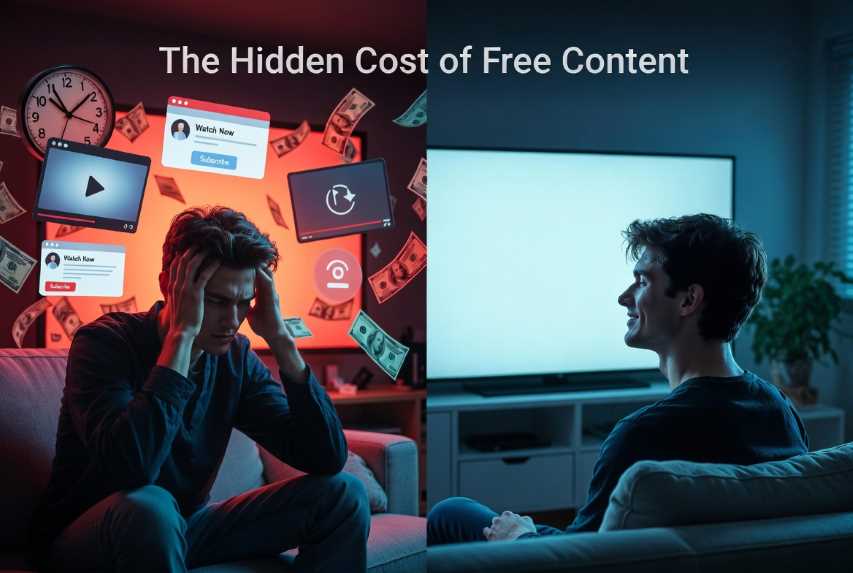
In today’s digital landscape, advertisements are more pervasive than ever. They appear before, during, and after videos on YouTube. They interrupt movies and series on streaming platforms. They clutter traditional television broadcasts and pop up relentlessly inside mobile apps and games. What was once a tolerable part of “free” content has evolved into a constant battle for attention. Many platforms now offer cheaper ad-supported tiers alongside premium ad-free options, yet millions of users deliberately choose to pay extra to hide or eliminate commercials entirely.
Why do people make this choice? The reasons go far beyond simple convenience. They involve the real value of time, the psychological toll of constant interruptions, privacy concerns, the desire for deeper immersion, and the practical benefits that often come bundled with ad-free subscriptions. This detailed exploration examines every major angle — from hard numbers on time lost to ads, through platform-specific experiences, to the broader economic and behavioral shifts shaping media consumption in 2026.
The Modern Attention Economy and Rising Ad Fatigue
We live in an attention economy where every second of focus is monetized. Platforms compete fiercely for your eyeballs because advertising remains their primary revenue driver. Over the past decade, ad loads have steadily increased across nearly every medium. YouTube, once relatively light on commercials, now frequently serves multiple ads at the beginning of videos, mid-roll interruptions on longer content, and additional ads on connected televisions. Traditional broadcast and cable channels still dedicate 15 to 20 minutes or more per hour to commercials during prime viewing times. Ad-supported streaming tiers insert breaks that can feel especially jarring during emotional or plot-critical moments.
This saturation has produced widespread ad fatigue. People report feeling annoyed, manipulated, or even “stalked” by repetitive or highly personalized ads that follow them across devices and websites. Studies consistently show that a large percentage of consumers actively try to avoid or ignore ads when possible. Many describe the experience as mentally draining — the constant context-switching required to tune out commercials reduces enjoyment and can leave viewers feeling more stressed rather than relaxed after their leisure time.
The effect is particularly noticeable with younger audiences and heavy media consumers who spend several hours daily across YouTube, streaming services, and apps. What used to be occasional 30-second spots has become a barrage that disrupts flow, breaks concentration, and turns relaxing activities into frustrating ones. Paying to remove ads is, for many, a direct response to this growing sense of overwhelm.
Quantifying the True Cost of Ads: Time, Money, and Opportunity
One of the most compelling arguments for paying is simple mathematics: time spent watching ads is time you cannot recover. While exact ad loads vary by platform, content length, device, and even time of day, real-world user reports and platform behaviors suggest several minutes of advertising per hour of content on major services.
Consider these practical scenarios:
Light user (45–60 minutes of YouTube or streaming per day): Even at a modest 3–4 minutes of ads per hour, this person loses roughly 2–4 minutes daily — or 1 to 2 hours per month.
Average user (1.5–2 hours daily across platforms): Ad time can easily reach 5–10+ minutes per day, totaling 2.5 to 5+ hours lost every month.
Heavy user or family (3+ hours daily, multiple people): Monthly ad exposure can exceed 8–15 hours or more.
Now assign a realistic value to that time. If you value your leisure or productive time at even $15–25 per hour, the “hidden cost” of ads quickly becomes significant — often $40 to well over $100 per month for moderate-to-heavy viewers. Compare this to the price of most ad-free subscriptions:
YouTube Premium individual plans typically cost around $15–16 per month in many markets (with family plans offering better per-person value). Netflix’s ad-free Standard tier sits near $20, while premium tiers with additional features reach the mid-to-high $20s. Hulu and similar services show similar gaps between their ad-supported and ad-free plans.
For many households, the subscription cost is lower than the monetary value of time reclaimed — and that calculation does not yet include reduced frustration or the extra features that usually accompany paid plans. Families sharing a plan often find the economics especially favorable because multiple people benefit from a single monthly fee.
Beyond raw hours, there is an opportunity cost. Time spent watching ads could instead be used for actual content consumption, learning, family interaction, or rest. When you compound these over months and years, the cumulative loss becomes substantial.
Platform-Specific Experiences and Why Interruptions Matter
Different platforms create different levels of frustration, which explains why users prioritize ad removal on some services more than others.
YouTube stands out because of its mix of long-form videos, background listening, and mobile-first usage. Mid-roll ads during educational content, tutorials, or long documentaries feel especially disruptive. Many viewers also use YouTube for music, podcasts, or ambient sound while working or relaxing — contexts where any interruption destroys the experience. Official ad removal through Premium delivers seamless background playback, screen-off audio, and offline downloads that free workarounds rarely match reliably.
Streaming services such as Netflix, Hulu, Disney+, and Max have introduced ad-supported tiers that are noticeably cheaper. However, the inserted commercials often appear at fixed intervals or during key scenes, breaking narrative immersion. Binge-watchers and movie lovers frequently report that even a few ads per episode significantly diminish enjoyment. The ad-free tiers restore the original “lean-back” experience that made streaming popular in the first place.
Traditional TV channels and live broadcasts still carry heavy commercial loads. Cord-cutters who moved to streaming sometimes discover that ad-supported tiers recreate the same old problems. Paying for higher tiers or using DVR-like features to skip ads restores control over viewing pace.
Mobile apps and games represent another major category. Many popular free apps rely on frequent interstitial ads, banner ads, or rewarded video ads that interrupt core functionality. Paying a one-time unlock or small subscription often removes these entirely while also unlocking additional features or removing artificial limits. For productivity apps, news readers, or casual games, the difference in user experience can be dramatic.
Across all these platforms, the common thread is flow state disruption. Psychological research on attention and task switching shows that even brief interruptions require significant mental effort to recover from. When ads repeatedly pull you out of an engaging video, movie, or game, the overall experience suffers far more than the raw minutes lost would suggest.
Privacy, Data Tracking, and the “Creepy” Factor
Another major driver is privacy. Ad-supported models depend on extensive data collection — tracking viewing habits, search history, location, device usage, and cross-site behavior to serve personalized ads. Many users find this ecosystem invasive. Retargeting ads that follow you from one site or app to another create an unsettling sense of being monitored.
While paid ad-free plans do not eliminate all platform data collection, they substantially reduce the volume of third-party advertising tracking and the aggressive personalization that fuels the “creepy” feeling. For families concerned about children’s data exposure or individuals who simply prefer less surveillance in their entertainment, this reduction in tracking is a meaningful benefit.
The Valuable Extras That Come with Most Ad-Free Plans
Paying for ad removal rarely delivers only the absence of commercials. Most premium tiers bundle genuinely useful features that enhance daily use:
YouTube Premium includes background playback (allowing audio to continue when switching apps or locking the screen), offline downloads for travel or low-data situations, integrated ad-free YouTube Music, and Picture-in-Picture support.
Higher streaming tiers often provide more simultaneous streams, better video quality options, or additional content libraries.
App subscriptions frequently unlock full feature sets, remove usage limits, and deliver cleaner interfaces with better performance.
These extras frequently tip the scales for users who were already on the fence. Once people experience true background listening or reliable offline access, returning to the ad-supported version feels like a downgrade.
The Subscription Fatigue Paradox and Platform Economics
Ironically, while many users complain about “subscription fatigue,” platforms have responded by creating more tiers — including cheaper ad-supported options. From the company perspective, ad-supported plans are often more profitable per user because they generate both subscription revenue and advertising income. This economic reality explains why services actively promote their lower-priced ad tiers and sometimes make the ad-free experience more expensive over time.
For consumers, this creates a clear choice: accept more interruptions in exchange for a lower monthly bill, or pay more for a cleaner, more enjoyable experience. Those who consume content heavily tend to land on the ad-free side of the equation because the time and enjoyment savings outweigh the extra cost.
Limitations of Free Workarounds and Why Official Solutions Win
Many people first try free ad blockers, modified apps, DNS filters, or browser extensions. These approaches sometimes work on desktop browsers for a while, but they face serious limitations in 2026:
YouTube and other major platforms actively detect and counter many blocking methods, especially on official mobile apps and smart TVs.
Workarounds are often unreliable across devices — what works on a laptop may fail completely on a television or phone.
Some unofficial solutions carry security or malware risks.
They almost never provide the extra features (background play, downloads, music integration) that come with official subscriptions.
Using them can violate terms of service and occasionally leads to reduced functionality or account warnings.
Official ad-free subscriptions, by contrast, work seamlessly everywhere the service is available, receive regular updates, and include the full set of premium capabilities. For users who value reliability and convenience across multiple devices and household members, the paid route is usually the lower-friction solution.
Impact on Different Demographics
The value of ad removal varies by lifestyle:
Families often prioritize it to create calmer viewing environments and limit children’s exposure to commercials.
Students and professionals appreciate fewer distractions during focused study or background listening sessions.
Frequent travelers benefit enormously from offline downloads and reduced data usage.
Older adults or less tech-savvy users tend to prefer simple, uninterrupted experiences without needing to manage blockers or workarounds.
Heavy multitaskers who use content while working, exercising, or doing chores find background playback and seamless audio especially valuable.
Data Usage, Battery Life, and Secondary Benefits
Ads consume mobile data and processing power. On cellular connections, removing video and image-based advertisements can noticeably reduce data consumption and sometimes improve battery life and device performance. While these secondary benefits are smaller than the primary time and enjoyment gains, they add up for users on limited data plans or older devices.
Looking Ahead: Will Ad Loads Keep Increasing?
Current trends suggest platforms will continue experimenting with monetization. As competition for advertising dollars intensifies and user growth slows in mature markets, many services have strong incentives to increase ad frequency or make ad-supported tiers more prominent. This environment makes the long-term value of locking in ad-free access through subscriptions more attractive for consistent users.
At the same time, consumer pushback and competition among platforms may lead to better tier differentiation or occasional promotions. The core tension — between free/ad-supported accessibility and premium uninterrupted experiences — is unlikely to disappear.
How to Decide Whether Paying Is Right for You
A practical way to evaluate the decision is to track your own habits for one or two weeks:
Note roughly how many hours per day you spend on YouTube, streaming services, and apps.
Estimate or observe how often ads interrupt you.
Calculate the potential time savings using the scenarios outlined earlier.
Compare that against the monthly cost of the relevant premium plans (many offer free trials or low-commitment monthly options).
Test the ad-free experience during a trial period and honestly assess whether the improvement in enjoyment and reduced frustration feels worth the price.
For many people, especially those consuming more than an hour or two of video content daily, the combination of reclaimed time, smoother experience, privacy improvements, and useful extra features makes the paid option clearly worthwhile. For very light users who are content with occasional ads or who successfully use workarounds on limited devices, staying with free tiers may remain the better choice.
Final Perspective
Paying to hide or remove ads is ultimately a personal investment in your attention, time, and quality of life. In an era where media consumption occupies several hours of most people’s days, even small improvements in experience compound into meaningful gains. The decision is not purely financial — it is also about how you want to feel while consuming content and how much control you want over your leisure time.
For heavy viewers, families, and anyone who values seamless, high-quality entertainment without constant commercial interruptions, the math and the lived experience frequently favor the ad-free route. The growing number of subscribers to services like YouTube Premium and ad-free streaming tiers reflects this reality: when the cost of “free” content becomes too high in terms of time and frustration, many people are willing to pay for peace of mind and better content consumption.
If you are considering making the switch, starting with a short trial on your most-used platform is the lowest-risk way to see the difference for yourself. The improvement in flow, focus, and overall enjoyment is often more noticeable than expected.
 |  |  |
 |  |  |