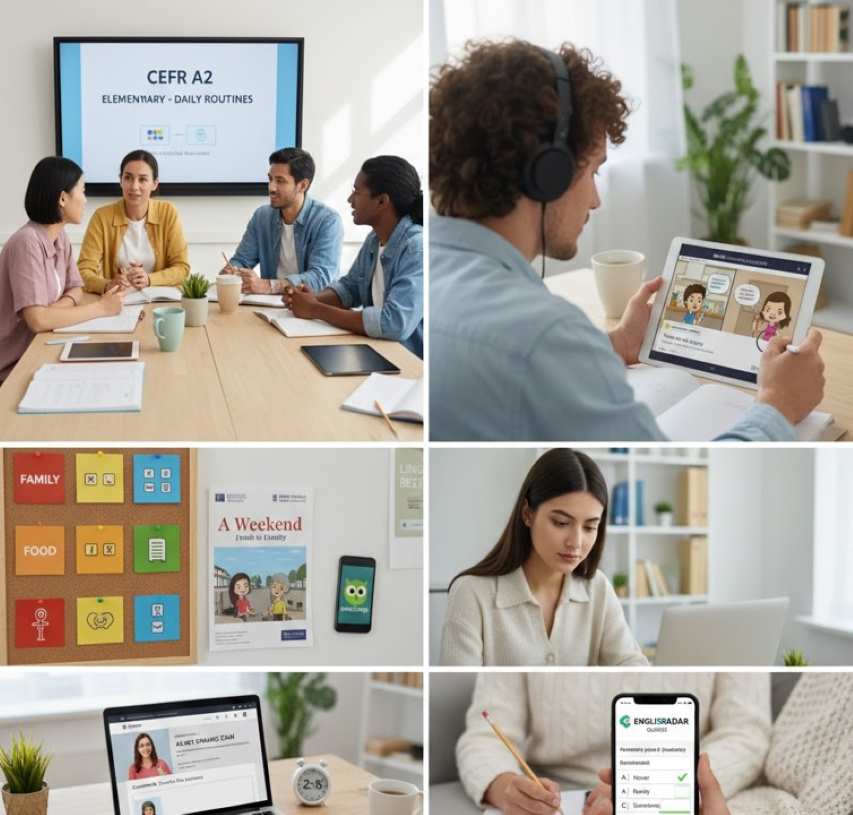
The Common European Framework of Reference for Languages (CEFR) A2 level, often referred to as Elementary or Pre-intermediate, describes learners who can handle basic communication in everyday, common situations.
At this stage, you can:
Understand and use simple sentences related to personal information, shopping, work, and immediate surroundings.
Describe aspects of your background, express likes and dislikes, and handle short social exchanges.
The communication is functional but typically executed with limited vocabulary and grammar structures.
Building skills at the A2 level primarily focuses on practical usage through repetition, consistent exposure, and active practice.
💡 Free Resources for A2 Elementary Learning
The following resources are drawn from reputable educational institutions and platforms, and they are all accessible without payment (although some may require free registration).
🎬 Free Videos for A2 Learning
Videos are an excellent tool for developing listening comprehension and improving pronunciation by providing real-life context and visual aids.
Source | Description | Focus Areas |
|---|---|---|
| Offers free video series suitable for lower-intermediate learners (A2-B1), including short clips on topics like habits, work, and travel. | Everyday topics, listening practice ("6 Minute English"), practical scenarios (e.g., routines, giving directions). | |
| British Council | The "Starting Out" series features interactive videos on basic conversations, daily life, and simple narratives. | Basic conversations, daily life, comprehension (Includes subtitles). |
| YouTube Channels | Offers structured video lessons: | Hobbies, weather, food, dialogues, vocabulary, everyday expressions, grammar lessons (e.g., Present Simple). |
| Lingo Best | Interactive videos that teach grammar (e.g., Past Simple) and vocabulary (e.g., hobbies) through stories and animations. | Grammar, Vocabulary, Storytelling. |
| Cambridge English | Free sample speaking tests and tutorials for the A2 Key exam, showing real exam scenarios and tips. | Speaking practice, Exam preparation. |
Recommendation: Aim for 10 to 15 minutes of video practice daily, repeating videos to improve pronunciation and fluency.
📝 Free Learning Materials and Courses
These materials, including worksheets, flashcards, readings, and full courses, help to build core grammar, vocabulary, reading comprehension, and writing skills.
British Council Resources: Comprehensive free sections specifically for A2:
Grammar: Explanations and examples (e.g., prepositions, comparative adjectives).
Vocabulary: Flashcards and lists on topics like family, food, and jobs.
Reading: A2 stories and articles for comprehension practice.
Writing/Speaking: Practice prompts for short descriptions or dialogues.
Lingo Best Free Elementary Course A2.1: A structured 20-lesson course covering grammar (e.g., tenses, adjectives), vocabulary (e.g., health, travel), and communication skills.
Includes: Reading passages, flashcards, games, and exercises. A certificate is available upon completion.
EnglishRadar Free Lessons: Detailed A2 modules on grammar (e.g., Past Continuous, Future with "going to"), vocabulary (e.g., weather, education), and communication (e.g., making requests, describing places).
Duolingo English Course: Free application-based lessons aligned with CEFR A1-A2, offering bite-sized exercises on basics like introductions, shopping, and routines.
Cambridge English Materials: Free downloadable sample papers for the A2 Key exam, including reading and writing tasks and vocabulary lists.
Digital practice tools like Test & Train for interactive preparation.
Other Sites: Really Learn English provides A2 overviews with worksheets; Testizer and Skills for English offer grammar/vocab sheets.
Learning Strategy: Start with vocabulary building, then move to grammar, and apply these skills through reading and writing exercises.
💯 Free Exams and Practice Tests
Assess your progress with full mock exams that simulate official A2 certifications like the A2 Key (formerly known as KET).
Resource | Description | Format |
|---|---|---|
| Tracktest A2 Practice Test | A full 45-minute mock test covering grammar (use of English), reading comprehension, and listening (audio included). Requires a score of 65% or more to pass A2. | PDF download with audio files. |
| Cambridge A2 Key Sample Tests | Official free samples for reading, writing, listening, and speaking, including the 2020 revised format. | PDFs and online digital versions. |
| Test-English A2 Key Exam | Complete practice with speaking tasks and realistic scenarios. | Online interactive. |
| ESLeSchool KET Practice | Pre-intermediate level tests covering all language skills. | Online and downloadable. |
| British Council Level Test | A quick online test to confirm your current proficiency level and A2 readiness. | Online quiz. |
Best Practice: Treat these as real exams—time yourself and thoroughly review all your mistakes afterward.
❓ Free Quizzes for A2 Practice
Quizzes are excellent for reinforcing knowledge through quick, targeted exercises.
British Council Quizzes: Embedded in their skills sections (e.g., A2 listening and reading quizzes) and vocabulary/grammar pages.
EnglishRadar Quizzes: One quiz per lesson, covering specific grammar points (e.g., adverbs of frequency) and vocabulary (e.g., body parts).
Lingo Best Quizzes: Two to three quizzes per lesson on topics such as adjectives or the Past Simple tense.
Skills for English Quizzes: Short tests focusing on vocabulary, grammar, and usage.
Testizer A2 Proficiency Quiz: An online test that provides instant feedback on your performance.
YouTube Quizzes: Channels like Simple ESL offer video-based quizzes (e.g., "A2 CEFR test").
Recommendation: Complete 5 to 10 quizzes weekly, specifically targeting the areas where you feel weakest.
📈 Suggested Study Routine
Combine these resources for a balanced routine to ensure you practice all four skills (reading, writing, listening, and speaking):
Videos (Listening/Pronunciation): 20 minutes daily.
Materials/Quizzes (Grammar/Vocabulary): 30 minutes daily.
Tests (Assessment): One full practice test weekly.
By maintaining a consistent study schedule, you can expect to advance to the B1 Intermediate level in a few months.
 |  |  |
 |  |  |